.svg)
unified sdlc
compliance
audit evidence
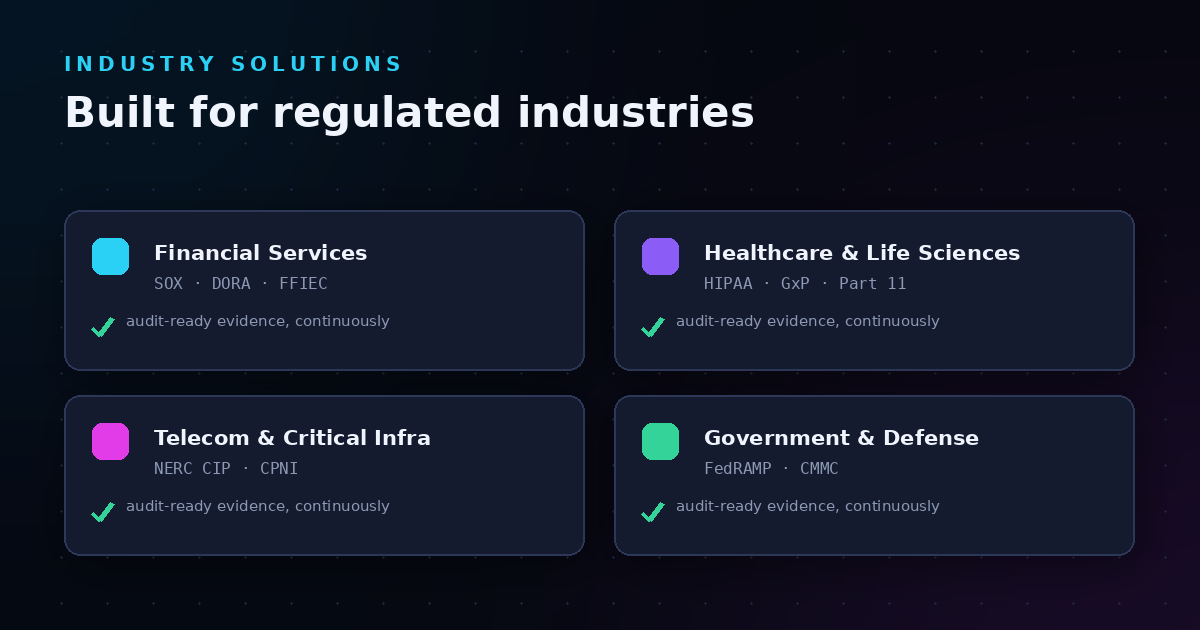

Healthcare software development comes with a regulatory burden that general-purpose DevOps tools were never designed to handle. Your release pipeline needs to do more than ship code—it needs to produce audit evidence, maintain traceability, and satisfy HIPAA requirements without slowing down your engineering velocity.
That's where unified software delivery platforms come in. Instead of stitching together five or six tools and hoping they generate the evidence chain auditors expect, the right platform consolidates DevOps, ITSM, and compliance into one intelligent system. LoopIQ gives you that unified approach with built-in audit trails and release certification.
This guide compares six platforms that engineering leaders in healthcare consider when evaluating software delivery infrastructure. You'll find out which platforms offer genuine traceability, which ones require workarounds, and what to prioritize for audit-ready releases.
Regulated software delivery has specific demands that generic tool reviews overlook. We evaluated each platform based on how well it addresses the real challenges VPs and directors of software development face in healthcare environments.
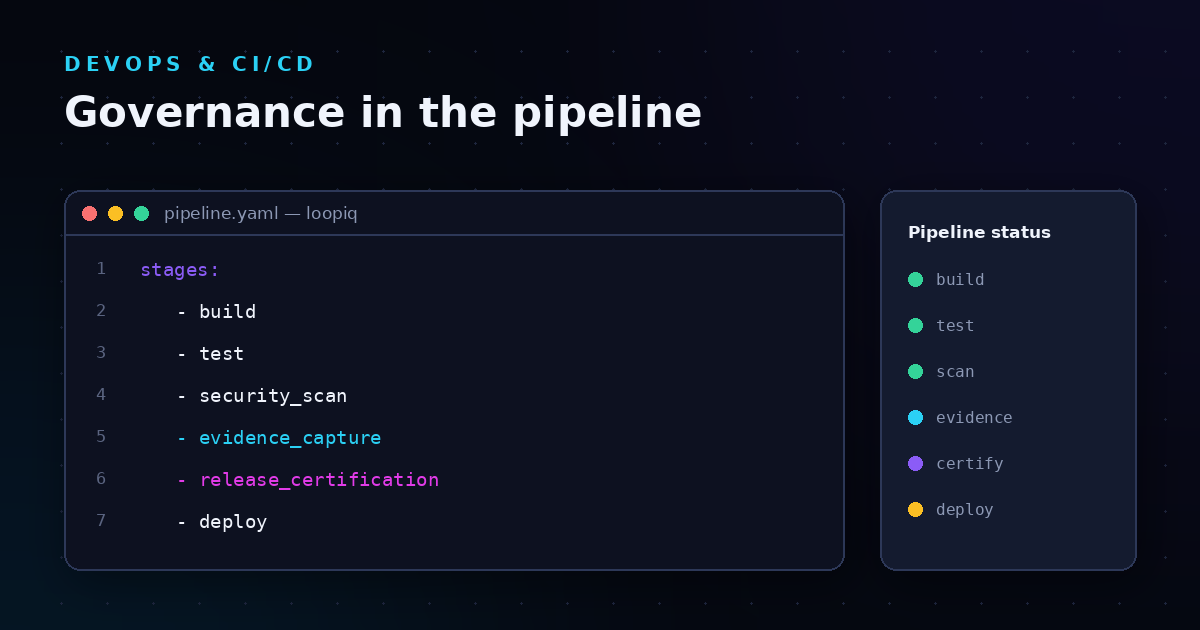
LoopIQ delivers what healthcare engineering leaders actually need: a single workspace where development, operations, and compliance live on the same surface. Instead of assembling audit evidence from scattered tools after the fact, LoopIQ captures approvals, quality signals, and release decisions automatically as your team ships software.
For VPs of development managing regulated releases, this changes the compliance conversation entirely. LoopIQ connects every release to its objectives, test results, and approval chain—creating defensible documentation that auditors can review without pulling your senior engineers off shipping work. The platform generates a one-click compliance evidence dossier for each release, eliminating the two-day scramble that typically precedes audits.
LoopIQ integrates DevOps, ITSM, and documentation into one intelligent system. This means your incident-to-deployment-to-audit workflow runs through a single platform, with complete context preserved at every decision point. For healthcare organizations running multiple compliance frameworks simultaneously, LoopIQ's approach eliminates the gaps that arise when evidence ownership sits between tools.
Pros:
Cons:
GitLab combines source control, CI/CD pipelines, and security scanning in a single application. Engineering teams appreciate having code, pipelines, and merge requests visible without switching between tools.
For healthcare organizations, GitLab offers compliance pipelines and audit logging features. However, GitLab focuses primarily on the development side of software delivery—ITSM, incident management, and audit documentation typically require additional platforms.
Pros:
Cons:
Harness positions itself as a software delivery platform with modules for CI, CD, feature flags, and cloud cost management. The platform includes deployment verification that monitors application performance after releases.
Healthcare organizations evaluating Harness should note that the platform focuses on deployment automation rather than compliance evidence generation. You may still need separate systems for audit documentation and ITSM integration.
Pros:
Cons:
ServiceNow dominates enterprise ITSM and has expanded into DevOps with change management and release automation modules. Organizations already using ServiceNow for IT service management may consider extending it for software delivery workflows.
The platform's strength lies in change management and approval workflows. However, ServiceNow's DevOps capabilities require significant configuration, and the platform does not replace dedicated CI/CD tools.
Pros:
Cons:
Atlassian's combination of Jira for project management and Bitbucket for source control creates a familiar environment for software development. Jira Service Management adds ITSM capabilities, though as a separate product.
Healthcare teams using Atlassian tools benefit from the integration between planning and development. However, true unified delivery requires connecting multiple products, and compliance evidence often sits across Jira tickets, Confluence pages, and Bitbucket commits.
Pros:
Cons:
Jenkins remains widely used for CI/CD automation, with extensive plugin support for nearly any integration requirement. Organizations with dedicated DevOps expertise can build highly customized pipelines.
For healthcare compliance, Jenkins requires significant additional tooling. The platform handles build and deployment automation but does not include ITSM, compliance documentation, or audit trail generation natively.
Pros:
Cons:
| Platform | Native Compliance Evidence | Unified DevOps + ITSM | End-to-End Traceability |
|---|---|---|---|
| LoopIQ | ✓ | ✓ | ✓ |
| GitLab | ✗ | ✗ | ✗ |
| Harness | ✗ | ✗ | ✗ |
| ServiceNow | ✗ | ✓ | ✗ |
| Atlassian | ✗ | ✗ | ✗ |
| Jenkins | ✗ | ✗ | ✗ |
Healthcare software delivery has requirements that standard DevOps evaluations miss. Before selecting a platform, consider how your team handles these scenarios today and how each option would change that workflow.
First, think about audit preparation. How many hours does your team spend assembling evidence before compliance reviews? If the answer involves pulling senior engineers off shipping work to screenshot approvals and compile documentation, your current tools have gaps. The right platform captures this evidence automatically.
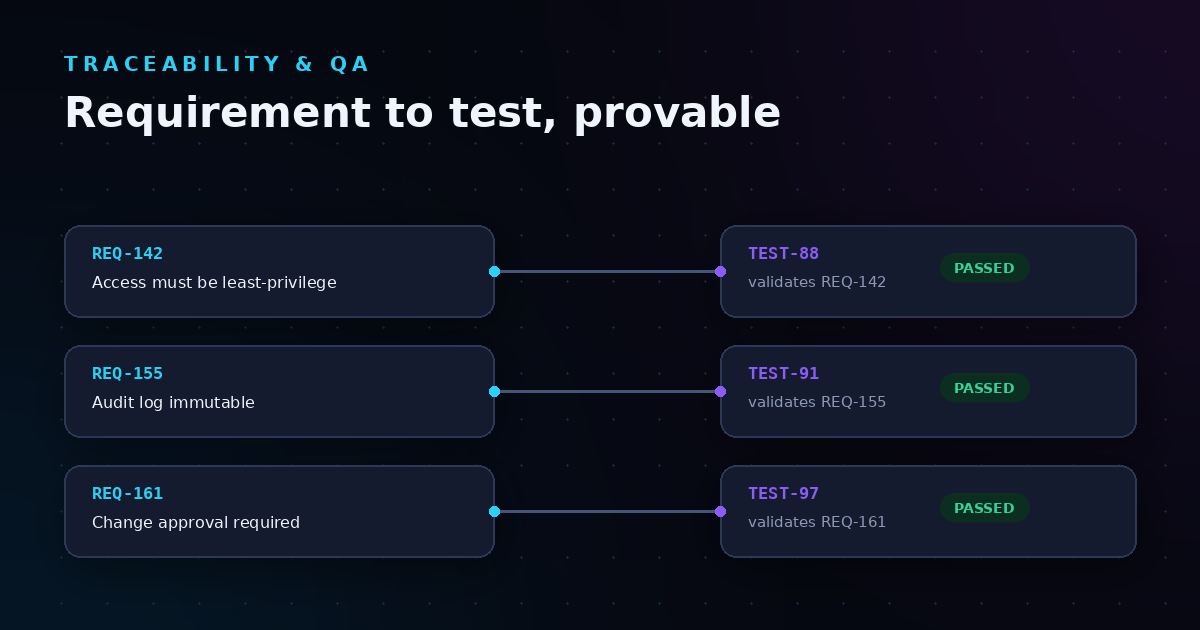
Second, consider traceability. When an auditor asks "how did this release happen?", can you show the complete chain from requirement through approval to deployment in one place? Platforms that scatter evidence across multiple systems create risk and manual effort.
HIPAA's Security Rule requires audit controls that record and examine activity in systems handling electronic protected health information. For software delivery, this extends to your development pipeline itself.
Every code change, approval, and deployment touching healthcare systems needs documented traceability. The challenge for engineering teams is producing this evidence without creating a separate compliance workflow that slows delivery.
Platforms designed with compliance built in—rather than bolted on—address this by generating audit artifacts as a byproduct of normal development work. LoopIQ embeds compliance tracking directly into the delivery lifecycle, tying policy to objectives and linking results to releases automatically.
Healthcare engineering teams face a fundamental tension: ship software fast while producing the audit evidence regulated environments demand. Most platforms force you to choose—optimize for velocity with generic DevOps tools and bolt on compliance later, or slow down to satisfy auditors.
LoopIQ eliminates that tradeoff. The platform captures compliance evidence as your team works, generating defensible release documentation without a separate audit preparation effort. This is why LoopIQ stands apart from platforms that treat compliance as an afterthought.
LoopIQ connects your engineering work directly to audit evidence in one workspace. Every release ships with a certification trail that links objectives, approvals, test results, and deployment decisions. When auditors ask questions six months after a release, you have deterministic answers—not reconstructed narratives from scattered tools.
For VPs and directors of software development managing healthcare releases, this changes how compliance fits into your delivery cadence. Instead of pulling senior engineers off shipping to assemble audit packets, your team gets release confidence with compliance documentation already attached. Explore how LoopIQ delivers audit-ready software delivery for healthcare.
A unified software delivery platform combines DevOps, ITSM, and compliance capabilities in one system. Instead of connecting separate tools for code management, CI/CD, incident tracking, and audit documentation, you work in a single workspace.
LoopIQ takes this further by generating compliance evidence automatically as your team ships software. This means release certification trails, approval records, and audit documentation are ready without manual assembly.
Healthcare software must satisfy regulatory requirements that demand proof of how releases happen. End-to-end traceability connects every deployment to its originating requirements, code changes, test results, and approvals.
Without this traceability, your team reconstructs evidence from multiple systems during audits—pulling senior engineers away from productive work. LoopIQ captures this traceability automatically throughout the delivery lifecycle.
LoopIQ embeds compliance tracking into the delivery lifecycle itself. Approvals, quality signals, and deployment decisions are captured at the moment they happen—not documented retroactively.
The platform generates a one-click compliance evidence dossier for each release, including immutable approval records and linked documentation. This eliminates the audit preparation scramble that healthcare teams typically face.
General-purpose DevOps tools like GitLab, Jenkins, or Harness handle build and deployment automation effectively. However, they typically lack native compliance evidence generation and require separate systems for ITSM and audit documentation.
Healthcare organizations using these tools often spend significant time assembling audit evidence from multiple sources. LoopIQ consolidates this workflow into one platform with compliance built in.
Look for platforms that generate audit evidence as a byproduct of normal work—not as a separate documentation effort. Prioritize end-to-end traceability, policy-based change control, and unified DevOps plus ITSM capabilities.
LoopIQ addresses all three requirements in a single platform, giving healthcare engineering leaders confidence that releases are audit-ready without slowing delivery velocity.