.svg)
unified sdlc
compliance
audit evidence

When an incident hits production at 2 a.m., the last thing you want is to dig through five different tools to figure out who approved what and whether your response meets compliance requirements. If you're a VP of Development or IT operations leader, you already know that disconnected systems create blind spots during audits and slow down incident resolution.
That's why the best IT governance platforms unify role-based access controls, approval workflows, and compliance reporting across incidents and deployments. LoopIQ gives you this unified approach, connecting delivery work with compliance evidence in a single workspace.
This article covers 10 platforms that support governance across your software delivery lifecycle. You'll find options for different team sizes and compliance requirements, along with clear criteria for choosing the right fit.
Selecting a governance platform means balancing compliance rigor with operational efficiency. You need something your developers will actually use while still satisfying auditor requirements. We evaluated each platform based on how well it connects incident management with compliance workflows and deployment controls.
LoopIQ unifies your entire software delivery lifecycle into one AI-powered workspace. Instead of stitching together separate tools for planning, DevOps, ITSM, and compliance, you get a single system that captures evidence as work happens. LoopIQ automates compliance documentation so your engineering team can ship faster without creating audit chaos.
The platform connects delivery work directly to compliance requirements. When a change request moves through approval, LoopIQ records who approved it, when, and under what policy. This means your audit evidence exists before auditors ask for it—not after a scramble through email threads and chat logs.
LoopIQ preserves audit-ready evidence across the SDLC. Role-based dashboards give each team member visibility into their change requests, approvals, and pending actions. Multi-approver workflows enforce separation of duties automatically, so you can meet SOC 2 or ISO 27001 requirements without slowing down releases.
Pros:
Cons:
ServiceNow has built its reputation on IT service management, and its Integrated Risk Management suite extends that foundation into governance and compliance. The platform connects risk management to daily operations through automated workflows, policy enforcement, and real-time dashboards.
For organizations already using ServiceNow for ticketing and change management, adding GRC modules keeps everything on one platform. Policy and compliance management automates control testing and links results to your broader risk register. However, if you're starting from scratch, the implementation effort and licensing costs can add up quickly.
Pros:
Cons:
Jira Service Management extends Atlassian's project management platform into IT service management and change control. If your team already tracks work in Jira, JSM adds approval workflows, incident management, and change review capabilities without switching tools.
The change management workflow includes built-in review stages: change manager or peer review, and change advisory board (CAB) review. You can enforce mandatory approvals so that only designated reviewers can transition a request forward. Integration with Confluence keeps runbooks and documentation accessible during incident response.
Pros:
Cons:
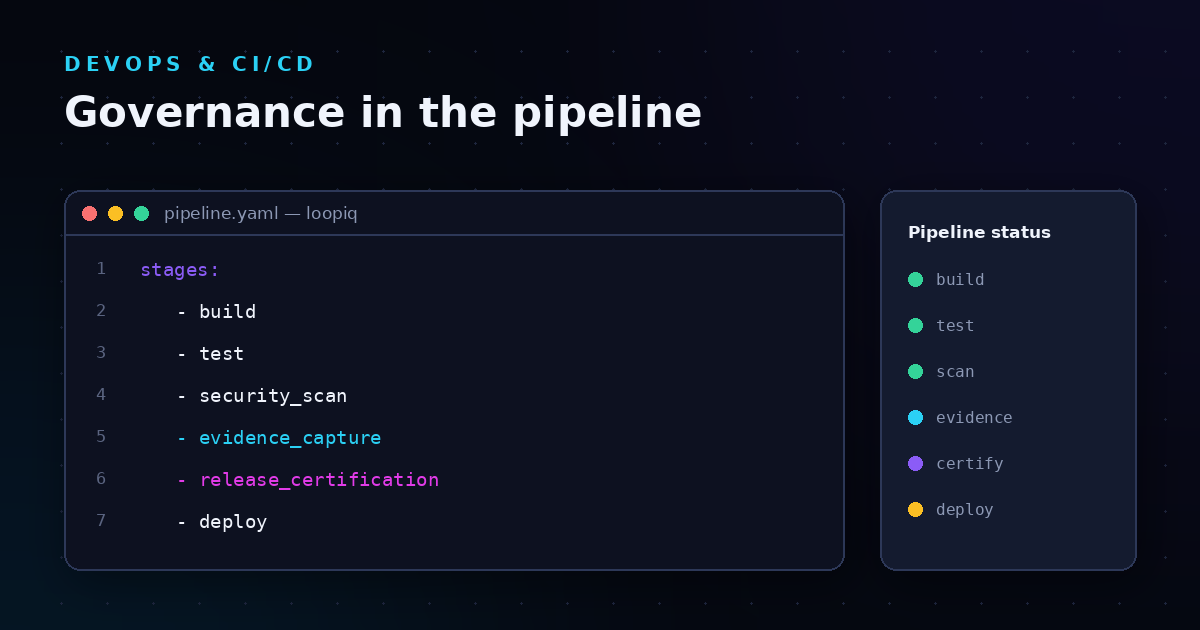
GitLab positions itself as a DevSecOps platform with built-in security scanning and deployment controls. The deployment approvals feature lets you require sign-off before code reaches protected environments like staging or production. This supports separation of duties without adding manual gates to your CI/CD pipeline.
Compliance pipelines enforce required jobs—such as security scans—across all projects, preventing teams from bypassing controls. GitLab's compliance frameworks feature lets you define adherence rules mapped to standards like CIS CSC or CSA CCM, with built-in dashboards showing which projects meet requirements.
Pros:
Cons:
PagerDuty has long served DevOps and SRE teams as an incident alerting platform. It routes alerts to the right on-call responders, tracks incident timelines, and integrates with monitoring tools like Datadog and AWS CloudWatch. Event intelligence uses machine learning to suppress noise and correlate related alerts.
For governance, PagerDuty captures incident response timelines that can support post-incident reviews and compliance documentation. Service graphs and business impact metrics help you assess which incidents affect critical systems. However, it's primarily an incident response tool—compliance workflows and change management require integration with separate systems.
Pros:
Cons:
ilert is an incident response platform built for DevOps and SRE teams, with particular appeal for organizations requiring European data residency and GDPR compliance. The platform combines alerting, on-call scheduling, and status pages in one system. Its AI SRE agent investigates alerts automatically, analyzing logs and recent changes to suggest remediation steps.
For governance, ilert's audit trails capture who was notified, when they acknowledged, and what actions they took. Automated postmortem generation turns incident timelines into structured reports. ISO 27001 certification and EU hosting make it a consideration for privacy-conscious organizations.
Pros:
Cons:
Archer is an enterprise GRC platform known for deep configurability. It handles risk management, policy governance, audit workflows, and third-party oversight. Organizations with complex compliance environments—multiple business units, varied regulations—can model their specific risk dimensions and control relationships.
The platform's AI-powered horizon scanning monitors regulatory sources and categorizes updates into a unified obligation catalog. This helps compliance teams stay ahead of regulatory changes. However, Archer's flexibility comes with complexity: over-customization can create maintenance challenges, and the user interface may require training for non-GRC specialists.
Pros:
Cons:
AuditBoard takes a "connected risk" approach, linking audit management, SOX compliance, IT risk, and enterprise risk in one cloud platform. Its SOXHUB module automates control testing and evidence collection for financial compliance. OpsAudit streamlines internal audit workflows with no-code analytics.
For incident-related governance, AuditBoard's ITRM module brings together information security, compliance, and IT risk management. You can assess cybersecurity risk, track issues, and align IT controls with business objectives. AI-enabled features assist with report generation and risk mapping.
Pros:
Cons:
MetricStream offers a connected GRC platform spanning business GRC, cyber risk, and ESG management. It's built for large organizations handling many frameworks, regions, and regulatory requirements. The federated data model ties risks, controls, assets, and issues together with pre-defined relationships.
Continuous control monitoring replaces periodic checks with automated evidence collection. The platform supports policy management, audit workflows, and regulatory change tracking. AppStudio lets administrators customize modules without heavy coding. However, the platform's depth comes with higher cost and administrative effort.
Pros:
Cons:
Splunk Enterprise Security is a SIEM platform that combines security analytics with incident detection and response. It correlates logs and events from multiple sources, using machine learning to detect threats before they escalate. Pre-built dashboards support compliance reporting for standards like HIPAA and SOX.
For IT governance, Splunk captures detailed audit trails of security events and system changes. Integration with ITSM and GRC tools connects security incidents to broader compliance workflows. However, it's primarily a security analytics platform—governance and change management require additional tools or integrations.
Pros:
Cons:
| Platform | Unified SDLC Governance | Auto Evidence Collection | Built-in Incident Management |
|---|---|---|---|
| LoopIQ | ✓ | ✓ | ✓ |
| ServiceNow | ✗ | ✓ | ✓ |
| Jira Service Management | ✗ | ✗ | ✓ |
| GitLab | ✗ | ✓ | ✗ |
| PagerDuty | ✗ | ✗ | ✓ |
| ilert | ✗ | ✗ | ✓ |
| Archer | ✗ | ✓ | ✗ |
| AuditBoard | ✗ | ✓ | ✗ |
| MetricStream | ✗ | ✓ | ✗ |
| Splunk ES | ✗ | ✗ | ✓ |
Role-based access controls are the foundation of any governance platform. You need clear rules for who can approve changes, access sensitive systems, and modify configurations. The platform should enforce these rules automatically—not rely on manual checks that break down under pressure.
Audit trail generation matters for compliance, but the timing matters too. Evidence captured at the moment of action is far more reliable than documentation assembled weeks later. Look for platforms that record approvals, status transitions, and configuration changes as they happen.
Integration with your existing tools determines whether the platform will actually get used. A governance system that doesn't connect to your CI/CD pipeline, monitoring stack, or ticketing system creates manual work that slows adoption. Check for native integrations or well-documented APIs.
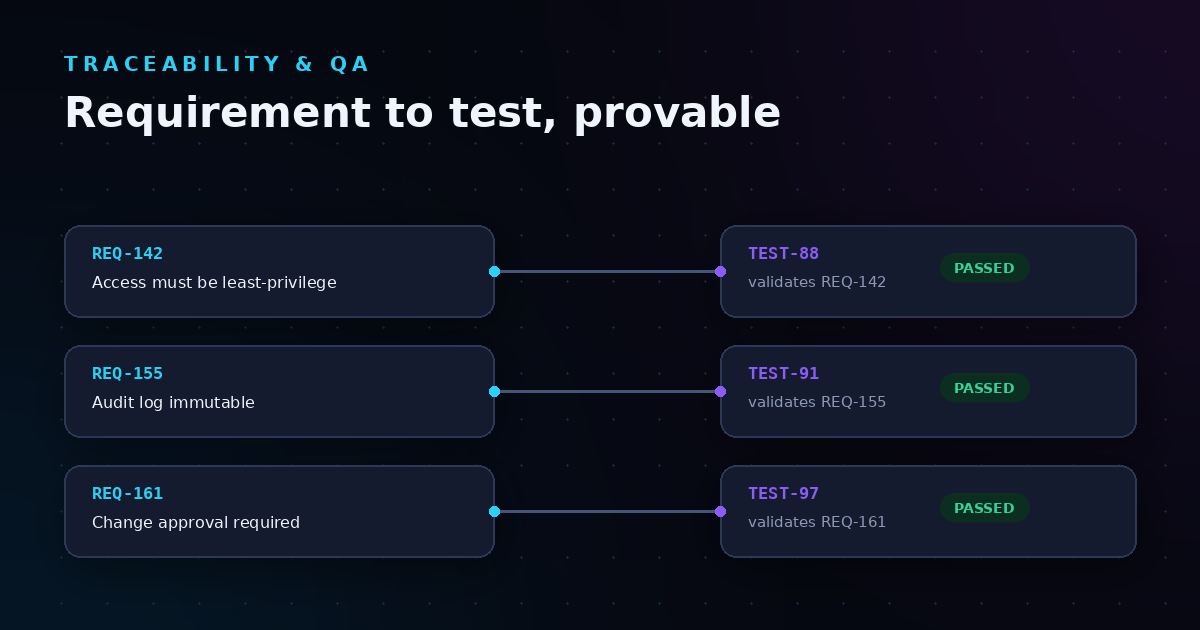
Approval workflows enforce accountability by creating a clear record of who authorized each change. When every deployment or configuration update requires sign-off from designated approvers, you eliminate the "who did this?" questions that derail incident investigations and audit prep.
Separation of duties is a core compliance requirement for frameworks like SOC 2 and ISO 27001. Automated approval workflows ensure that the person requesting a change cannot also approve it. This reduces fraud risk and demonstrates control effectiveness to auditors.
LoopIQ enforces multi-approver workflows automatically based on your policy configuration. When a change request enters the queue, the platform routes it to the appropriate reviewers and blocks deployment until all required approvals are recorded. This keeps your audit evidence current without requiring manual documentation steps.
Most governance platforms bolt compliance onto existing workflows as an afterthought. LoopIQ takes a different approach: it builds compliance into the delivery process from the start. When your evidence collection happens automatically during normal work, audits become verification exercises rather than reconstruction projects.
LoopIQ connects delivery work with compliance work in a single workspace. Change requests, approvals, deployments, and incident responses all feed into the same audit trail. This end-to-end traceability means you can answer auditor questions instantly instead of hunting through disconnected systems.
For VPs of Development and IT operations leaders managing multiple frameworks, LoopIQ reduces the overhead of compliance without sacrificing delivery speed. Your team ships software while the platform captures the evidence that proves you're doing it right. See how LoopIQ unifies your governance workflows.
An IT governance platform is software that helps you manage policies, access controls, and compliance requirements across your technology operations. It centralizes rules for who can do what, tracks changes for audit purposes, and connects risk management to daily workflows.
LoopIQ extends this concept by unifying IT governance with software delivery, capturing compliance evidence automatically as your team works.
Governance platforms track incident response activities and link them to related changes and approvals. This creates an audit trail showing how incidents were detected, who responded, and what actions resolved the issue.
LoopIQ captures incident details alongside deployment records, making root cause analysis faster and audit documentation automatic.
Most governance platforms support common frameworks like SOC 2, ISO 27001, NIST, HIPAA, and GDPR. The key is whether the platform maps controls once and reuses evidence across frameworks, or requires separate documentation for each.
LoopIQ supports multi-framework mapping so you can satisfy multiple audits with the same evidence set.
Manual change management relies on emails, meetings, and spreadsheets to track who approved what. Approval workflows automate routing, enforce mandatory reviews, and capture sign-offs in a system of record.
This automation reduces human error, speeds up approvals, and creates reliable evidence for compliance.
Smaller teams often benefit most because they lack dedicated compliance staff. An automated governance platform captures evidence and enforces controls without requiring a full-time GRC team.
LoopIQ scales from startup to enterprise, giving smaller organizations the same compliance capabilities as larger ones.