.svg)
devops
compliance
audit evidence

Software supply chain attacks have become board-level concerns. VPs and Directors of Software Development now need unified platforms that do more than just ship code—they need to prove every artifact's origin, verify every access decision, and generate audit-ready evidence automatically. LoopIQ delivers exactly that: a unified software delivery and compliance platform built for teams who refuse to trade speed for security.
This guide breaks down nine secure supply chain capabilities you should evaluate when comparing unified SDLC platforms. You will learn what each capability means, why it matters, and how different platforms handle it. By the end, you will have a clear framework for choosing the right tool for your delivery and compliance needs.
We evaluated platforms based on their ability to address what mid-market and enterprise engineering leaders care about most: shipping software faster while meeting regulatory and audit requirements. Here are the criteria that shaped our selections:
LoopIQ unifies planning, testing, DevOps, ITSM, documentation, and audit management into a single AI-powered workspace. This means you can track work from idea to deployment while automatically capturing the compliance evidence auditors need.
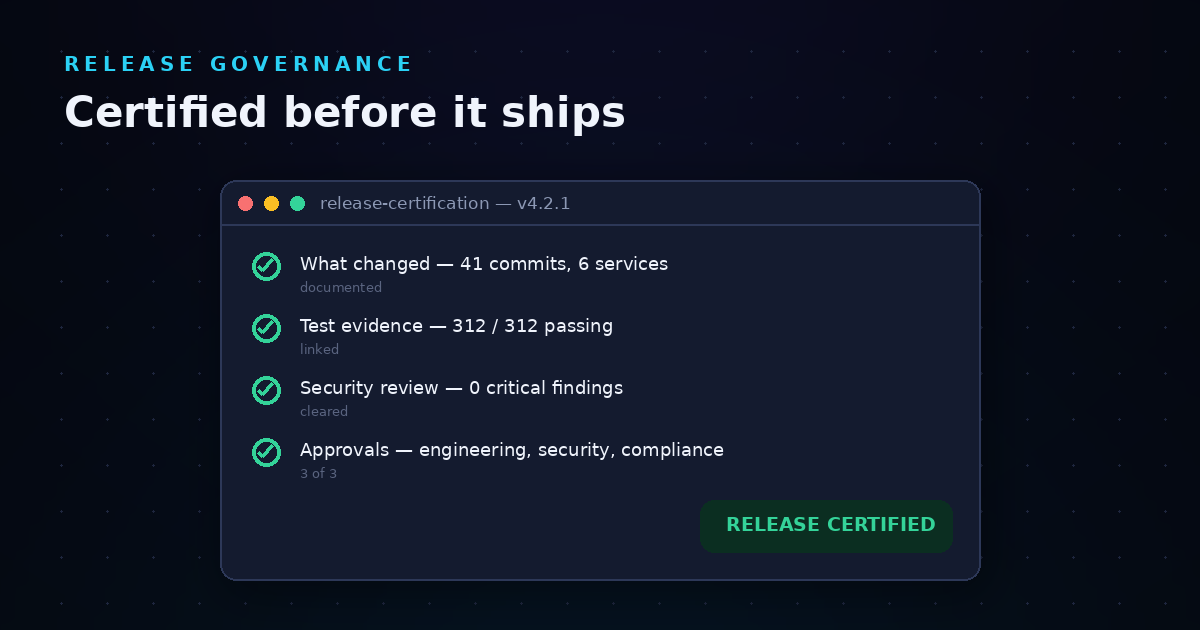
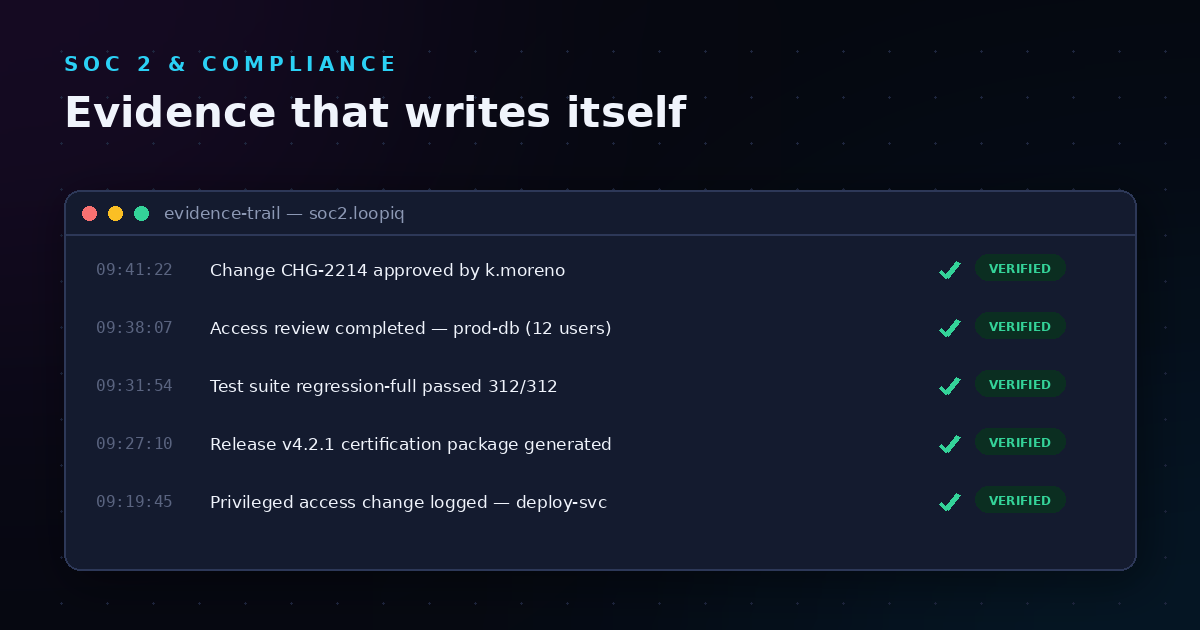
What sets LoopIQ apart is its compliance-first approach. Rather than bolting security onto existing workflows, LoopIQ builds governance into every step. As work happens—code reviews, test executions, change approvals—LoopIQ captures signals and compiles them into audit-ready release dossiers. This eliminates the last-minute scramble to reconstruct evidence before an audit.
LoopIQ connects delivery work with compliance work through a single pane of glass. You get end-to-end traceability across the SDLC, which means every release carries a complete record of what changed, who approved it, and what tests validated it.
Pros:
Cons:
GitLab combines version control, CI/CD, and security scanning in a single application. This makes it a natural fit if your team already uses Git-based workflows and wants security features built into the pipeline.
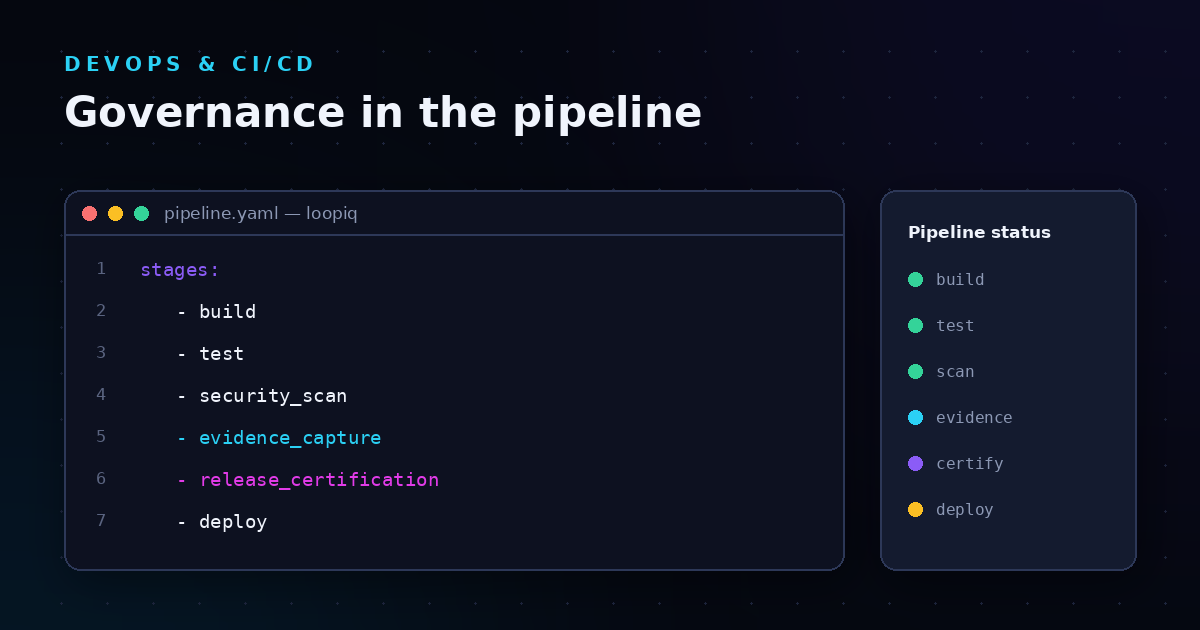
The platform includes static application security testing (SAST), dependency scanning, and container scanning. These run automatically during CI/CD pipelines, helping you catch vulnerabilities before code reaches production.
Pros:
Cons:
Azure DevOps offers boards, repos, pipelines, and artifacts as separate services that work together. If your organization runs on Microsoft technologies, this integration can simplify authentication, permissions, and deployment to Azure services.
The pipeline system supports YAML-based configurations and integrates with Azure security services. You can add security scanning through marketplace extensions or connect to Microsoft Defender for Cloud.
Pros:
Cons:
ServiceNow focuses on IT service management and workflow automation. If your organization already uses ServiceNow for incident management or change requests, extending it to cover DevOps governance can centralize approvals and audit trails.
The platform offers pre-built workflows for change management, risk assessment, and compliance tracking. Integration with CI/CD tools allows ServiceNow to serve as the governance layer while other tools handle builds and deployments.
Pros:
Cons:
| Platform | Automated Audit Evidence | Unified SDLC Workspace | AI-Powered Governance |
|---|---|---|---|
| LoopIQ | ✓ | ✓ | ✓ |
| GitLab | ✗ | ✗ | ✗ |
| Azure DevOps | ✗ | ✗ | ✗ |
| ServiceNow | ✓ | ✗ | ✗ |
An SBOM (Software Bill of Materials) is a machine-readable inventory of every component in your software. Think of it as an ingredients list that tells you exactly what went into your release—including open-source libraries, third-party dependencies, and their versions.
SBOMs matter because modern software is assembled from hundreds or thousands of components. According to CISA's SBOM guidance, having an accurate bill of materials helps you respond faster when vulnerabilities like Log4j emerge. Instead of guessing which applications are affected, you can query your SBOMs and know within minutes.
Regulations are catching up too. The NIST software supply chain security guidance following Executive Order 14028 made SBOM generation a baseline expectation for federal software suppliers. Enterprise buyers increasingly request SBOMs as part of procurement, which means having this capability can directly impact your ability to close deals.
Access controls determine who can do what—and when those decisions can be audited. For unified SDLC platforms, you should evaluate permissions at multiple levels: organization, team, project, and workflow step.
Role-based access control (RBAC) is the foundation. You want to assign roles like "release approver" or "compliance reviewer" and have those permissions enforced consistently across the platform. LoopIQ enables you to design roles that reflect real responsibilities, ensuring your permissions model matches how your organization operates.
Beyond basic RBAC, look for:
LoopIQ stands out because it treats compliance as a first-class feature, not an afterthought. While other platforms require you to stitch together multiple tools for delivery, governance, and audit evidence, LoopIQ unifies these capabilities in a single workspace.
For VPs and Directors of Software Development at mid-market and enterprise organizations, this matters because audit preparation should not derail delivery schedules. LoopIQ automates evidence collection as work happens—capturing approvals, test outcomes, and deployment decisions in real time. When auditors arrive, your release dossiers are already complete.
LoopIQ helps your team ship software faster while preserving traceability and governance. If your current toolchain forces you to choose between speed and compliance, it is time to see how a unified platform changes the equation. Schedule a demo with LoopIQ to see these capabilities in action.
A secure software supply chain protects every artifact, pipeline, and actor involved in building and delivering software. This includes verifying the integrity of open-source dependencies, tracking provenance of builds, and enforcing access controls throughout the development lifecycle.
LoopIQ addresses this by capturing compliance evidence automatically and maintaining end-to-end traceability from planning through deployment.
Manual evidence collection slows down releases and introduces errors. When you have to reconstruct what happened after the fact, gaps appear—and auditors notice.
Automated audit evidence, like what LoopIQ generates, captures approvals and test results as they happen. This means your release records are always current and complete.
Provenance tracking records the origin of every artifact and the chain of custody from build to deployment. If a vulnerability appears in a dependency, provenance data helps you trace which releases are affected.
LoopIQ maintains this traceability throughout the SDLC, connecting work activity to compliance evidence in one platform.
Look for role-based access control, team-level permissions, approval workflows, and complete audit logs. The platform should enforce separation of duties and let you configure who can approve different types of changes.
SBOMs document every component in your software, which regulators and enterprise buyers increasingly require. Having accurate SBOMs helps you respond to vulnerability disclosures and demonstrates due diligence during audits.
LoopIQ connects SBOM data to release evidence, giving you a complete picture of what shipped and why it was approved.