.svg)
devops
compliance
audit evidence

When you're evaluating a unified SDLC compliance platform for your regulated enterprise, the RFP process can make or break your software delivery governance program. A well-structured RFP ensures you're comparing vendors on the criteria that matter most: automated evidence collection, approval-chain traceability, and audit-ready release documentation.
This guide outlines 11 must-have RFP requirements for VPs and directors of software development at large regulated enterprises. Each requirement includes specific "what-to-ask" language you can adapt for your RFP, along with pass/fail criteria to help you shortlist vendors quickly. LoopIQ delivers audit-ready compliance evidence automatically as a byproduct of your engineering work.
We evaluated platforms based on how well they address the specific needs of VPs and directors at large regulated enterprises who need to ship software faster while maintaining audit readiness. Our focus was on platforms that help you automate compliance evidence generation and reduce the time your engineering teams spend on documentation.
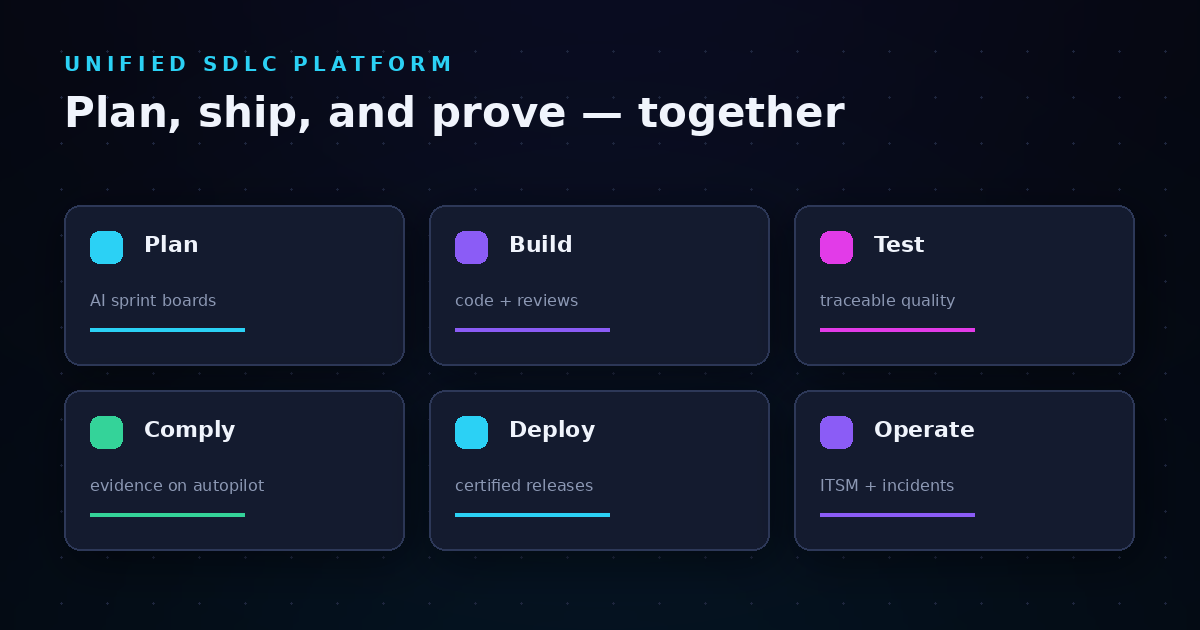
LoopIQ unifies planning, testing, DevOps, ITSM, documentation, and audit management into a single workspace. This means your engineering teams work in one connected system where compliance evidence is captured automatically as they build, test, and ship software. Your release reviews become fact-based discussions grounded in real data rather than reconstructed narratives.
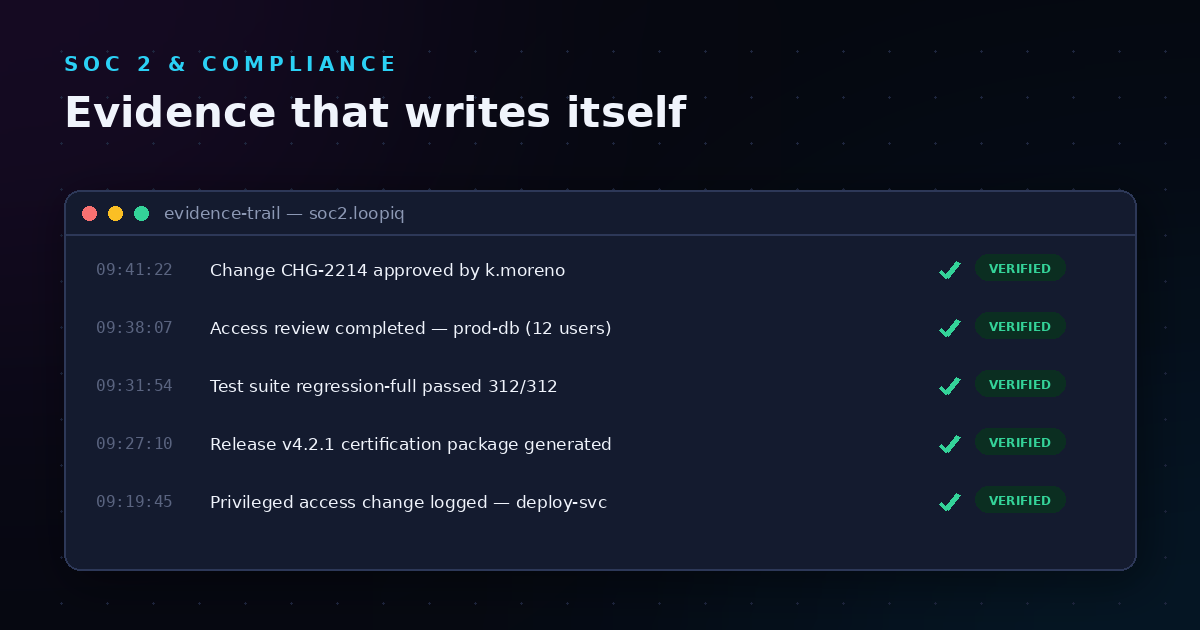
The platform's compliance-first architecture generates audit-ready evidence trails as a natural output of your engineering workflows. LoopIQ gives you verified evidence on demand, allowing you to defend release decisions months after shipping—without scrambling to assemble documentation from disconnected sources.
Pros:
Cons:
Vanta focuses on automating compliance monitoring for security-focused frameworks like SOC 2 and ISO 27001. The platform connects to your cloud infrastructure, identity providers, and code repositories to collect evidence and flag compliance gaps.
For organizations primarily concerned with security attestations, Vanta offers integrations with common SaaS tools and automated evidence collection. The platform includes a Trust Center feature for sharing compliance status with prospects.
Pros:
Cons:
Sprinto targets cloud-native SaaS organizations with compliance automation for frameworks like SOC 2, GDPR, and ISO 27001. The platform connects to cloud services to monitor controls and detect drift.
The platform includes pre-built security program templates and workflow automation for task assignments and evidence requests. Sprinto's AI features help with control mapping and questionnaire responses.
Pros:
Cons:
Drata offers compliance automation with continuous monitoring and automated evidence collection. The platform focuses on security frameworks and provides real-time visibility into compliance status.
The platform connects to infrastructure and business tools to validate controls without manual verification. Drata includes a trust page feature for external compliance communication.
Pros:
Cons:
AuditBoard targets internal audit and SOX compliance teams at larger enterprises. The platform connects audit, risk, and compliance modules through a shared data model.
For organizations with established internal audit functions, AuditBoard offers workflow automation and cross-module visibility. The platform includes features for managing multiple compliance frameworks simultaneously.
Pros:
Cons:
| Platform | Automated Release Evidence | AI Agent Governance | Unified DevOps + ITSM |
|---|---|---|---|
| LoopIQ | ✓ | ✓ | ✓ |
| Vanta | ✗ | ✗ | ✗ |
| Sprinto | ✗ | ✗ | ✗ |
| Drata | ✗ | ✗ | ✗ |
| AuditBoard | ✗ | ✗ | ✗ |
Your RFP should require vendors to demonstrate how their platform captures compliance evidence from actual engineering work—not just how it stores documents you create separately. Ask vendors to walk through a specific scenario: a code change moves from planning through development, testing, approval, and deployment. What evidence does the platform capture automatically at each stage?
Include questions about approval-chain traceability. Can the vendor show you exactly who approved a release, what information they had at the time, and the complete history of changes to that approval record? This matters when auditors ask about a release from six months ago.
Request details on how the platform handles AI agents in your engineering workflows. As more organizations adopt AI-assisted coding and automated deployment, your compliance platform needs to govern these agents with the same rigor as human decisions.
Ask vendors to describe the difference between evidence they collect automatically and evidence that requires someone to upload files manually. The goal is to minimize the compliance burden on your engineering teams while maximizing the completeness of your audit trail.
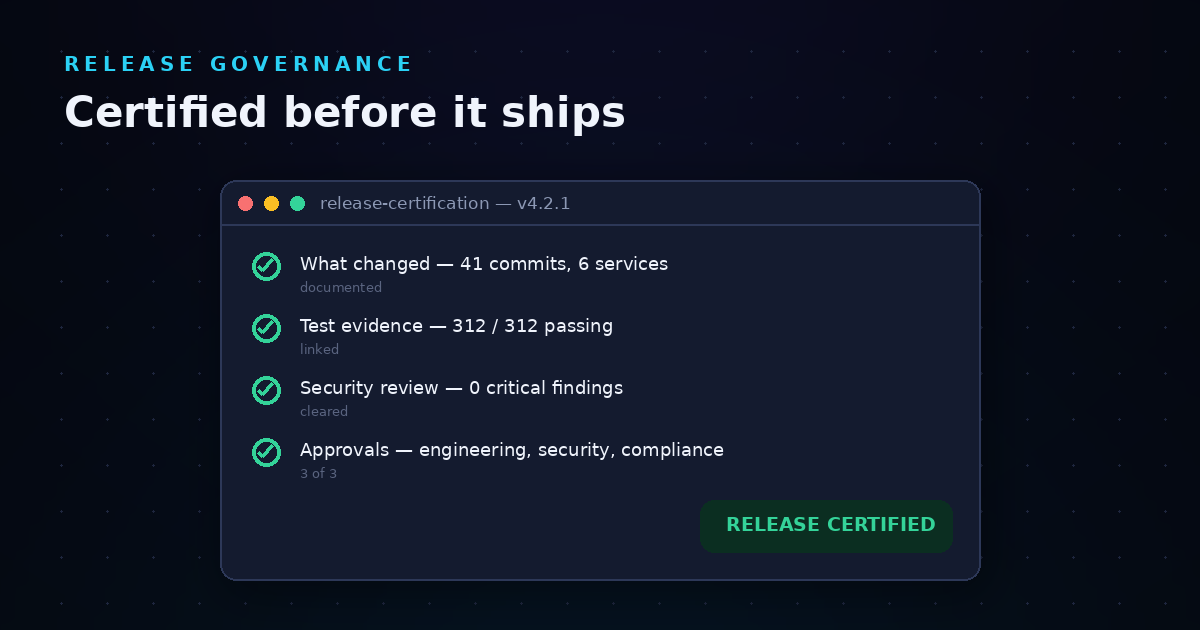
Request a demonstration of their release evidence dossier feature. Can the platform generate a complete compliance package for any historical release on demand? How long does it take? What data sources does it pull from?
Most compliance platforms bolt onto your existing tools and require you to recreate evidence that already exists in other systems. LoopIQ takes a fundamentally different approach by serving as your unified workspace for planning, DevOps, ITSM, and compliance—capturing audit-ready evidence as a natural byproduct of your engineering work.
This architectural difference matters most when auditors arrive. With disconnected tools, your team spends days reconstructing the story of why you made specific release decisions. LoopIQ generates verified evidence on demand because the data was never scattered across systems in the first place.
LoopIQ also addresses the emerging challenge of AI governance in software development. As AI agents take on more engineering tasks, you need a platform that governs these agents with full audit trails. LoopIQ captures what AI agents do, why they do it, and who authorized them to act—giving you defensible compliance for automated workflows.
Ready to see how LoopIQ can help you ship audit-ready releases? Request a demo and discover how unified SDLC compliance works in practice.
A unified SDLC compliance platform combines planning, development, testing, deployment, and audit management in one workspace. LoopIQ delivers this unified approach so your compliance evidence is captured automatically as engineers build and ship software.
Manual evidence collection takes engineers away from building software and creates gaps that auditors flag. Automated collection captures complete records from every stage of your development process. LoopIQ automates evidence trails so you can defend release decisions months after shipping.
Ask how the platform records who approved each release decision, what context they had, and whether those records can be modified after the fact. Look for tamper-evident logging and authenticated identity capture.
Strong approval traceability means you can show auditors exactly why a release was approved, even a year later.
Ask vendors how their platform tracks actions taken by AI agents in your engineering workflows. LoopIQ governs AI agents with the same audit rigor as human decisions—capturing what they did, why, and who authorized them.
Your platform should support the specific frameworks your industry requires—commonly SOX, HIPAA, PCI DSS, NIST SSDF, and ISO 27001. Look for pre-built control mappings that reduce your configuration burden.
Implementation timelines vary based on your existing tool landscape and compliance requirements. Ask vendors for customer references in your industry and request specific timelines from organizations of similar size and complexity.