.svg)
devops
compliance
audit evidence

Getting code out the door is one thing. Proving you did it the right way? That's where most engineering organizations hit a wall. Between fragmented tooling, unclear ownership, and audit deadlines that sneak up on you, software delivery compliance platforms have become essential—yet many still fall short. LoopIQ gives you a unified workspace that captures compliance evidence as work happens, not after the fact.
This article walks through eleven specific reasons why compliance becomes a bottleneck for development teams. You'll also find practical fixes for each problem, plus a look at how different platforms stack up when it comes to DevOps compliance challenges.
We evaluated platforms based on how well they help you ship software while staying audit-ready. The focus was on practical compliance capabilities that don't slow down your release velocity.
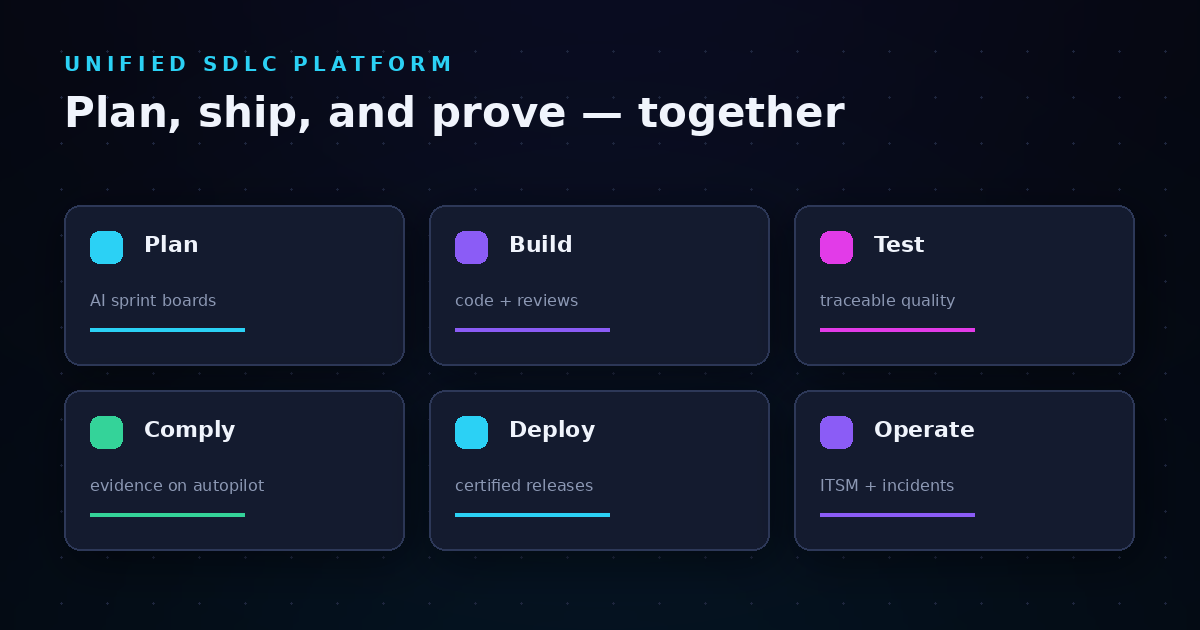
LoopIQ connects your planning, testing, DevOps, ITSM, and compliance workflows into one workspace. Instead of stitching together evidence from five different tools when an audit arrives, you get a single source of truth. Every approval, test result, and deployment decision gets captured automatically as your team works.
What makes LoopIQ stand out is its compliance-first architecture. The platform was built from the ground up to treat audit readiness as an output of your delivery process, not a separate project. LoopIQ automates evidence collection, so you're not scrambling to reconstruct what happened three months ago when an auditor asks questions.
Your team can define approval policies, SLA policies, and workflow governance rules that run automatically. When something needs a sign-off before deployment, LoopIQ enforces that gate and records the evidence. This means you spend less time on compliance overhead and more time shipping.
Pros:
Cons:
GitLab offers source control, CI/CD, and security scanning in one platform. If your primary need is running automated pipelines with basic compliance controls, GitLab has the core building blocks. The platform includes merge request approvals, protected branches, and audit event logging.
For compliance use cases, GitLab can integrate with ServiceNow DevOps to automate change request creation. This requires configuring webhooks and external connections. The platform focuses primarily on the development and deployment phases rather than end-to-end SDLC governance.
Pros:
Cons:
ServiceNow focuses on IT service management, including incident, change, and problem management workflows. The platform can integrate with CI/CD tools through its DevOps Change Velocity feature. This allows you to automate change request creation when pipelines run.
ServiceNow's strength is in ITSM workflows and approval routing. For organizations that already use ServiceNow for IT operations, adding the DevOps integration extends change management to your delivery pipelines. The platform requires connector configuration and ongoing maintenance to keep integrations working.
Pros:
Cons:
| Platform | Built-in Compliance Evidence | Unified SDLC + ITSM | Automated Approval Policies |
|---|---|---|---|
| LoopIQ | ✓ | ✓ | ✓ |
| GitLab | ✗ | ✗ | ✓ |
| ServiceNow | ✗ | ✗ | ✓ |
CI/CD compliance failures happen when there's a gap between what your pipeline does and what your governance policies require. The most common cause is missing enforcement—you have a rule that says code needs two approvals, but nothing stops a single person from pushing directly to production.
Another frequent issue is evidence gaps. Your pipeline might run all the right checks, but if there's no immutable record linking the approval to the specific commit and deployment, you can't prove it happened. Auditors need traceable evidence, not just assertions.
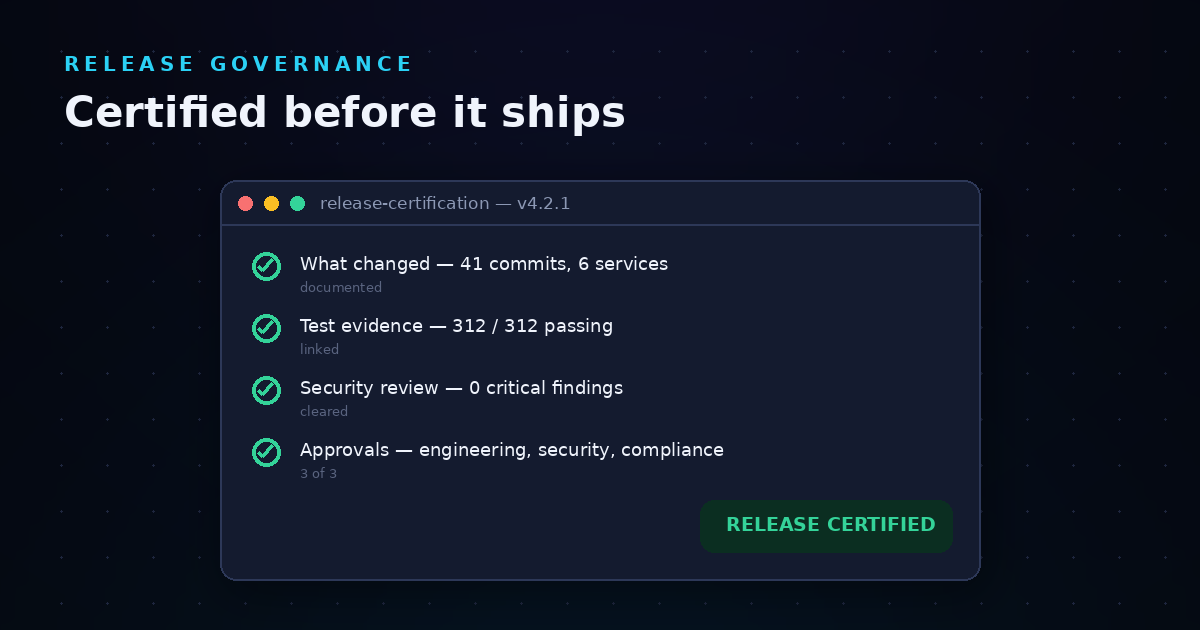
LoopIQ addresses both problems by making approval policies part of the workflow itself. When you configure a release certification requirement, the platform enforces it automatically and captures the evidence. This means your compliance controls are verified every time, not just when someone remembers to check.
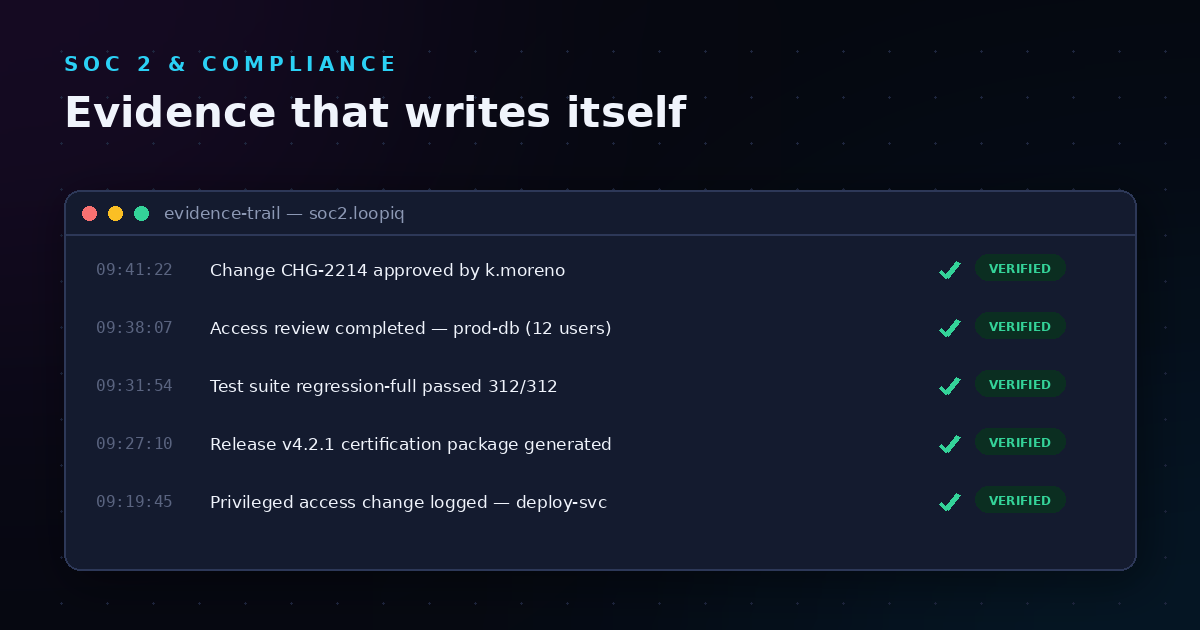
Automating audit evidence starts with capturing data where work happens. Instead of asking developers to document their actions separately, the evidence should be a byproduct of normal workflows. Every commit, approval, test execution, and deployment becomes part of the audit trail automatically.
The key is connecting your tools so evidence flows into a single repository. If your planning, code review, testing, and deployment data live in separate systems, you'll need integrations that pull it together. Otherwise, audit preparation becomes a manual reconstruction project.
LoopIQ captures evidence natively because planning, execution, and compliance all happen in the same workspace. When you approve a release certification, the platform links it to the specific work items, test results, and approvals that support it. Exporting this evidence for auditors takes minutes instead of weeks.
The core difference with LoopIQ is architectural. Most platforms bolt compliance onto existing workflows as an afterthought. LoopIQ builds compliance into the foundation, so evidence collection and policy enforcement happen without extra steps.
This matters because compliance work tends to expand to fill available time. When you need to gather evidence from multiple tools, chase down approval records, and stitch together audit narratives manually, compliance becomes a project that competes with delivery. LoopIQ eliminates that overhead by making compliance a natural output of how your team already works.
LoopIQ connects your delivery workflows with governance requirements in one place. You get release certifications, approval policies, SLA tracking, and compliance dashboards that show real-time status. When an auditor asks to see how a specific release was approved, you can pull that evidence in seconds—because it was captured automatically when the approval happened.
Ready to stop treating compliance as a separate project? See how LoopIQ works and start building audit-ready releases into your normal delivery flow.
Software delivery compliance means your development and release processes meet regulatory, security, and organizational governance requirements. This includes documenting approvals, maintaining audit trails, enforcing segregation of duties, and proving that quality controls were followed.
LoopIQ helps you meet these requirements by capturing compliance evidence automatically as your team works.
DevOps compliance challenges slow releases when compliance checks happen at the end of the pipeline instead of throughout. If your team waits until release day to gather approvals and documentation, that creates a bottleneck.
The fix is embedding compliance into your normal workflow. LoopIQ does this by running approval policies automatically and capturing evidence as work happens.
Audit preparation time depends on how your evidence is stored. If you need to reconstruct evidence from multiple tools, expect weeks of work. If evidence is captured automatically in a unified platform, preparation can take hours.
LoopIQ reduces audit preparation time by linking all evidence—approvals, test results, deployments—to release certifications that export cleanly.
Policy enforcement in CI/CD pipelines means automatically blocking or gating deployments that don't meet your governance requirements. This could include requiring specific approvals, passing security scans, or meeting code coverage thresholds.
LoopIQ enforces policies through configurable approval rules and release certification requirements that run automatically.
Yes, when compliance controls are automated and integrated into your workflows. Manual compliance processes create delays because they require human intervention at each step. Automated policies run in the background and only surface when action is needed.
LoopIQ automates approval routing, evidence collection, and compliance scoring so you maintain velocity while staying audit-ready.