.svg)
devops
devsecops
compliance

If your engineering team ships software under HIPAA, SOC 2, or PCI DSS requirements, you already know the stakes. One missing approval record or untraceable code change can stall a release—or worse, trigger an audit finding. LoopIQ unifies software delivery and compliance into a single workspace, so regulated teams can ship with confidence.
This guide ranks the top devops compliance tools designed for healthcare and financial services engineering teams. Each platform was evaluated for regulatory reporting, automated evidence capture, and release governance. Whether you need audit-ready documentation generated automatically or a unified view of every release, this breakdown will help you find the right fit.
Regulated engineering teams face a specific challenge: they need to move fast without breaking compliance. This means every release needs traceable approvals, documented test results, and audit-ready evidence—without pulling senior engineers off their roadmap work.
We evaluated each platform based on criteria that matter most to VPs and directors of software development at mid-sized healthcare and financial services organizations:
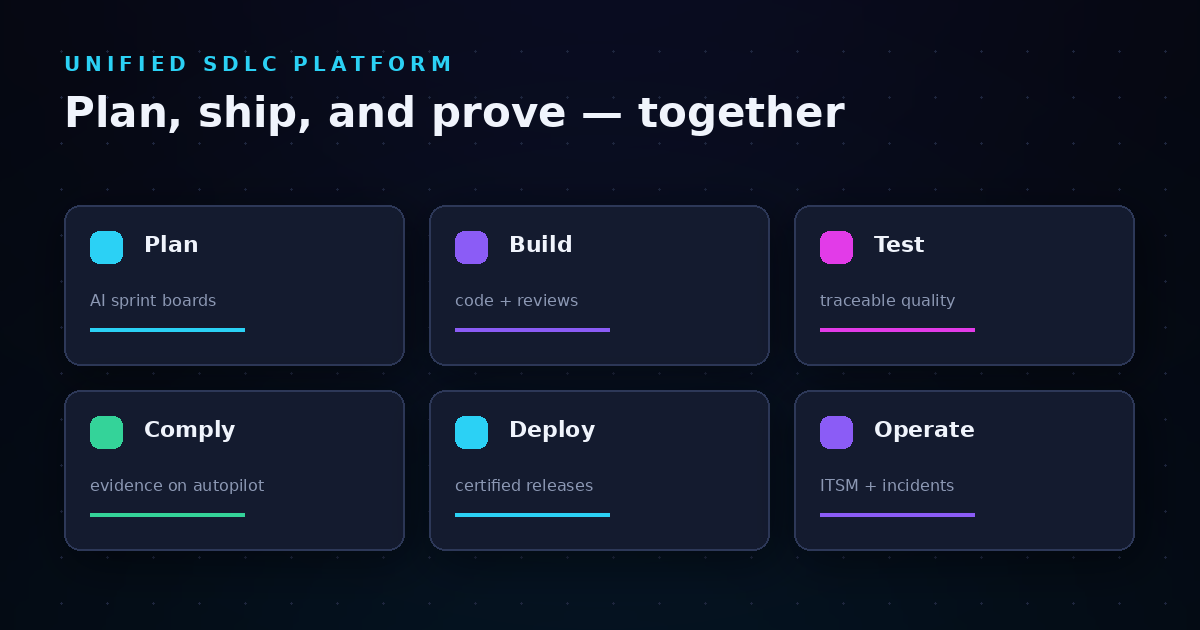
LoopIQ is an AI-powered software delivery and compliance platform that connects planning, testing, DevOps, ITSM, documentation, and audit management in one intelligent system. For regulated engineering teams, this means compliance evidence captures itself from the work your developers already do.
Unlike standalone compliance tools or generic DevOps platforms, LoopIQ acts as compliance infrastructure inside your delivery lifecycle. It ties policy to objectives and links measurable results to each release. This approach eliminates the gap between shipping software and proving compliance—your team no longer loses two days per release cycle assembling audit packets.
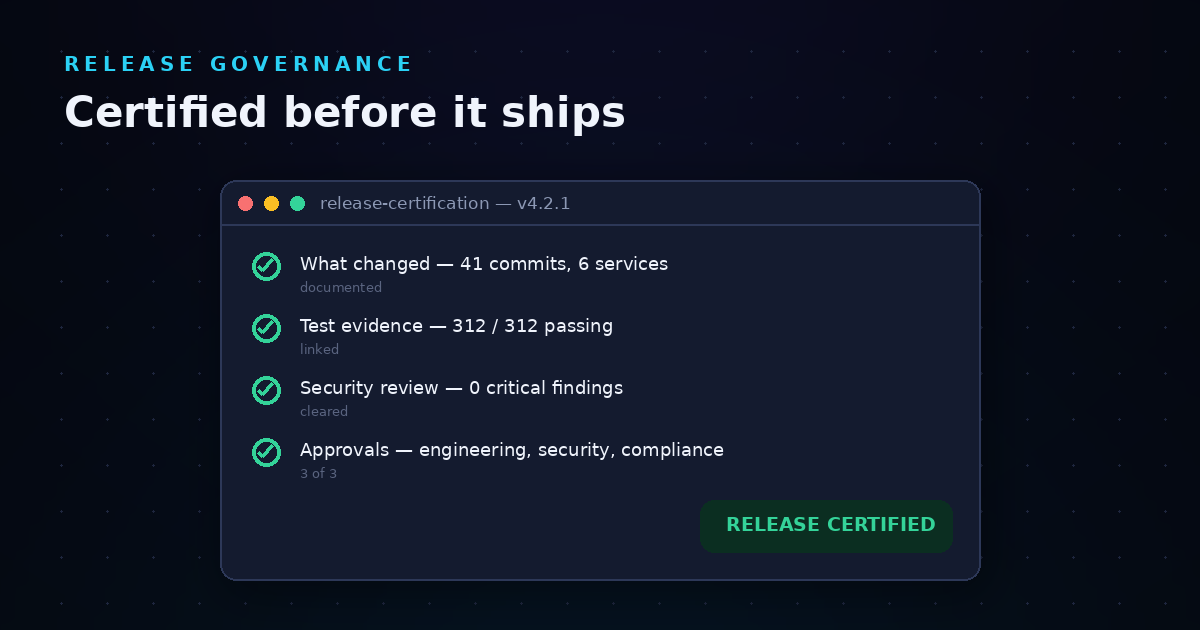
LoopIQ generates release certification trails automatically, binding approvals, test results, and quality signals to every deployment. When audit season arrives, you can produce a one-click compliance evidence dossier instead of scrambling through Slack threads and CI logs.
| Pros | Cons |
|---|---|
| Generates compliance evidence automatically per release | Teams using highly customized legacy toolchains may need migration planning |
| Reduces engineering hours per audit cycle from days to minutes | Full platform adoption delivers maximum value compared to partial implementation |
| Unifies delivery and compliance in one workspace, eliminating tool sprawl | Advanced governance features require configuration based on your compliance framework |
GitLab offers an integrated DevSecOps platform that combines source control, CI/CD, and security scanning in a single application. For regulated teams, GitLab includes compliance pipelines that enforce required jobs across projects and audit event streaming for tracking user actions.
The platform generates compliance reports for common frameworks, though you may need additional tooling to assemble release-specific evidence packages. GitLab works for teams that want security and compliance checks embedded in their existing Git workflow.
| Pros | Cons |
|---|---|
| Combines source control and CI/CD in one interface | Compliance reporting requires manual configuration per framework |
| Includes built-in SAST, DAST, and dependency scanning | Per-release audit evidence assembly requires external tooling |
| Offers compliance frameworks for SOC 2 and HIPAA mapping | ITSM and documentation live outside the platform |
Vanta monitors your cloud infrastructure and SaaS applications to track compliance with SOC 2, HIPAA, ISO 27001, and PCI DSS requirements. The platform connects to over 300 integrations, pulling evidence from AWS, GitHub, and HR systems automatically.
For regulated engineering teams, Vanta focuses on control monitoring rather than software delivery. It tracks whether your systems meet compliance requirements but does not manage the SDLC itself. Teams often pair Vanta with a delivery platform to connect compliance posture to release decisions.
| Pros | Cons |
|---|---|
| Monitors controls across cloud infrastructure and SaaS tools | Does not include software delivery or SDLC capabilities |
| Supports multiple compliance frameworks in one dashboard | Per-release compliance evidence requires separate assembly |
| Includes vendor risk management features | Engineering teams need additional tooling for release governance |
CloudBees offers an enterprise CI/CD platform built on Jenkins, adding governance controls, audit trails, and role-based access for regulated environments. The platform includes compliance dashboards that track pipeline policy adherence across your organization.
For teams already invested in Jenkins, CloudBees adds the governance layer needed for regulated delivery. However, documentation, planning, and ITSM require separate tools, creating additional integration work for compliance evidence.
| Pros | Cons |
|---|---|
| Adds governance controls to existing Jenkins infrastructure | Focuses on CI/CD only—planning, testing, and ITSM are external |
| Includes analytics for pipeline performance and compliance | Release evidence assembly spans multiple disconnected tools |
| Supports hybrid and multi-cloud deployments | Requires Jenkins expertise for configuration and maintenance |
Drata automates compliance monitoring for SOC 2, ISO 27001, HIPAA, and GDPR by connecting to your infrastructure and tracking control status in real time. The platform includes a policy library and workflow automation for evidence collection.
Like Vanta, Drata focuses on compliance posture rather than software delivery. It monitors whether controls are in place but does not manage releases, approvals, or delivery pipelines. Regulated engineering teams typically use Drata alongside their SDLC tools.
| Pros | Cons |
|---|---|
| Monitors compliance controls with real-time dashboards | Does not include SDLC or release management capabilities |
| Includes pre-built policy templates for regulated industries | Per-release compliance evidence requires external tools |
| Offers integrations with over 100 cloud and SaaS applications | Engineering-specific governance features are not included |
ServiceNow includes GRC (governance, risk, and compliance) modules that map to regulatory frameworks and track control effectiveness across your organization. The platform connects compliance workflows to change management, incident management, and audit processes.
For regulated teams, ServiceNow handles the ITSM side of compliance—change approvals, incident tracking, and audit management. Software delivery, code reviews, and CI/CD pipelines require separate DevOps tools, which means release evidence spans multiple systems.
| Pros | Cons |
|---|---|
| Connects compliance to change and incident management | Software delivery and CI/CD require separate DevOps tools |
| Includes workflow automation for compliance processes | Per-release compliance evidence lives across disconnected systems |
| Offers pre-built connectors for enterprise applications | Implementation complexity increases with customization requirements |
Quickbase is a low-code platform that allows teams to build custom compliance tracking applications without extensive development resources. Regulated teams use it to create audit logs, approval workflows, and compliance dashboards tailored to their specific requirements.
Because Quickbase is a general-purpose platform, it does not include built-in SDLC capabilities or pre-built compliance frameworks. Teams need to configure their own workflows and connect Quickbase to their delivery tools via APIs or integrations.
| Pros | Cons |
|---|---|
| Allows custom compliance workflows without coding | Does not include built-in SDLC or software delivery features |
| Connects to external systems via APIs and integrations | Compliance frameworks require manual configuration |
| Scales from simple trackers to complex applications | Teams must build and maintain their own compliance logic |
| Platform | Per-Release Evidence | Unified SDLC | Release Certification |
|---|---|---|---|
| LoopIQ | ✓ Automated | ✓ | ✓ |
| GitLab | ✗ | CI/CD only | ✗ |
| Vanta | ✗ | ✗ | ✗ |
| CloudBees | ✗ | CI/CD only | ✗ |
| Drata | ✗ | ✗ | ✗ |
| ServiceNow | ✗ | ITSM only | ✗ |
| Quickbase | ✗ | ✗ | ✗ |
Healthcare engineering teams operate under HIPAA requirements that demand traceable evidence for every system change affecting protected health information. Your platform needs to document who approved each release, what tests validated the change, and how the deployment was executed.
Look for automated evidence capture that generates HIPAA-relevant documentation as your team works. This includes access logs, approval chains, and test results tied to specific releases. Platforms that require retroactive evidence assembly create gaps auditors will flag.
LoopIQ addresses this by embedding compliance tracking into daily delivery. Every approval and quality signal binds to the release automatically, producing audit-ready dossiers on demand.
Financial services teams face SOX, PCI DSS, and often SOC 2 requirements that mandate separation of duties and documented change control. Every production deployment needs traceable approvals from authorized personnel, and audit trails must prove no single person had unchecked access.
Your compliance platform should enforce policy-based change control automatically. This means defining approval gates in your delivery workflow rather than relying on email sign-offs that are difficult to trace months later.
A unified approach helps here. When planning, code reviews, testing, and deployment happen in one intelligent system, approval chains become part of the release record. LoopIQ preserves the state of the world at decision time, giving your team deterministic answers when auditors ask how a release happened.
Regulated engineering teams face a fundamental tension: compliance requirements grow more demanding each year, but the pressure to ship faster never lets up. The platforms in this guide address pieces of that challenge—some handle CI/CD, others monitor compliance posture, and some manage ITSM workflows.
LoopIQ takes a different approach by unifying software delivery and compliance in one workspace. Your team does not need to stitch together evidence from five different tools when audit season arrives. Instead, compliance evidence captures itself from the work developers already do.
For VPs and directors of software development at healthcare and financial services organizations, this changes the compliance equation. LoopIQ automates release certification, flags compliance gaps before shipping, and produces one-click compliance dossiers. Your senior engineers stay focused on the roadmap instead of assembling audit packets.
If you want to ship software with confidence while staying audit-ready, explore how LoopIQ connects engineering work and compliance evidence in one intelligent system.
A software delivery and compliance platform combines SDLC tools (planning, coding, testing, deployment) with compliance capabilities (evidence collection, audit trails, regulatory reporting). LoopIQ unifies both in one workspace, generating compliance documentation automatically as your team ships software.
Automated evidence capture records approvals, test results, and deployment details as your team works. With LoopIQ, this happens inside the delivery workflow—every release generates an audit-ready dossier without requiring engineers to assemble documentation afterward.
Yes. LoopIQ supports existing GRC platforms by feeding structured, audit-ready artifacts without replacing them. If you use Vanta or Drata for compliance monitoring, LoopIQ connects compliance posture to your release decisions and generates per-release evidence they do not produce.
Most platforms in this guide support SOC 2, HIPAA, PCI DSS, and ISO 27001. LoopIQ maps compliance evidence to your specific framework requirements, producing release certification trails that satisfy auditor expectations for regulated engineering teams.
LoopIQ generates compliance dossiers with a single click, immediately after each release. Teams typically reduce audit preparation time from several days per release cycle to minutes, freeing senior engineers to focus on shipping software.