.svg)
devops
devsecops
compliance

Shipping secure software is one thing. Proving it shipped securely is another. If you're a VP or director of software development at a regulated organization, you know the gap between these two outcomes can cost your team weeks of work every audit cycle.
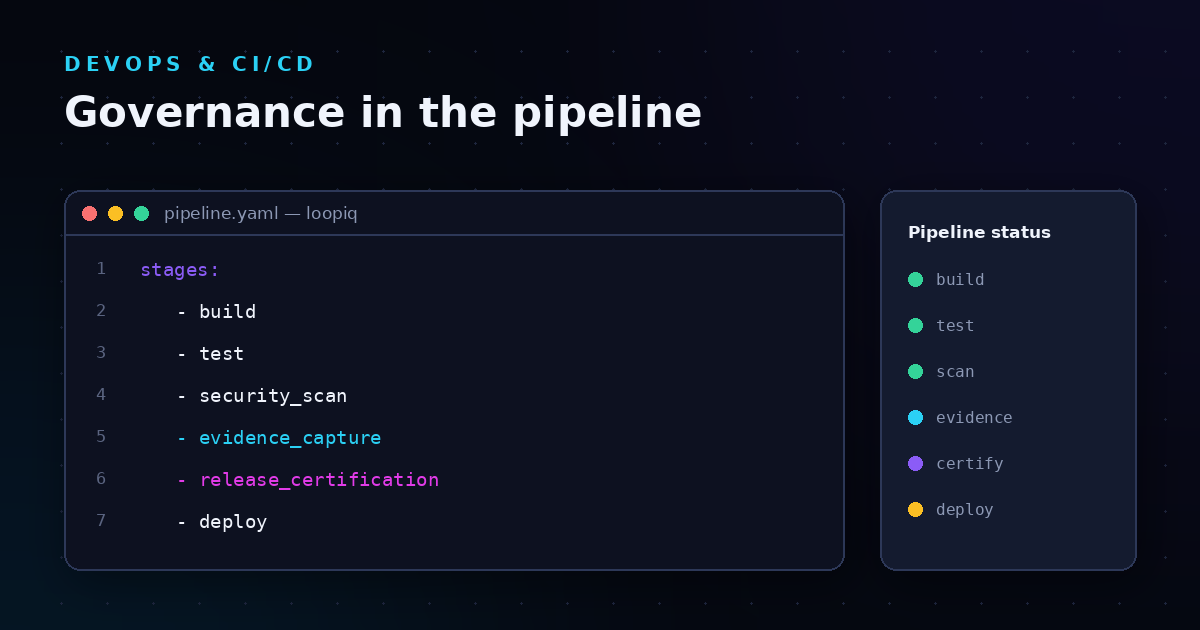
LoopIQ helps engineering teams close that gap by connecting CI/CD security signals directly to release certification—so your DevOps compliance tools don't just scan code, they generate audit-ready evidence. This article walks you through six DevOps compliance platforms that tie security, approvals, and release readiness together for regulated software delivery.
Most DevOps tool roundups focus on AppSec scanning and pipeline security coverage. That's important, but it's not the full picture. Regulated teams don't just need to detect vulnerabilities—they need to prove every release met defined conditions before shipping.
We evaluated these DevOps compliance tools based on how well they address the needs of engineering leaders responsible for both delivery velocity and audit readiness:
LoopIQ takes a fundamentally different approach to DevOps compliance. Rather than treating compliance as a checkpoint you hit after shipping, LoopIQ embeds compliance tracking directly into your delivery lifecycle. Your team captures approvals, test results, and security signals as part of normal engineering work—not as a separate documentation exercise.
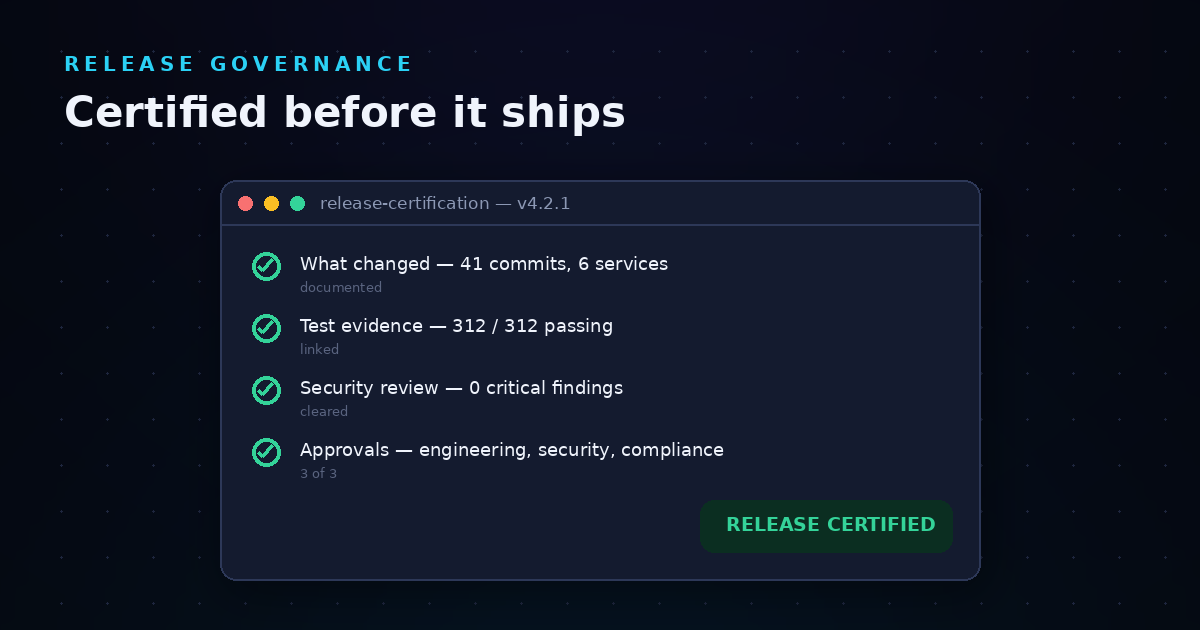
What makes LoopIQ stand out for regulated teams is release certification. Every time you ship, LoopIQ automatically generates a compliance dossier that ties your CI/CD security findings, code reviews, and approval chains to that specific release. When auditors ask whether a release was evaluated under defined conditions, you can answer with a single click.
LoopIQ also unifies planning, testing, DevOps, and ITSM into one intelligent system. This means your compliance evidence lives on the same surface as your engineering work—eliminating the need to reconstruct audit trails from GitHub, Slack, and CI pipelines after the fact.
Pros:
Cons:
GitLab offers an integrated DevSecOps platform that includes source code management, CI/CD pipelines, and built-in security scanning. You can run SAST, DAST, dependency scanning, and container scanning directly within your pipelines without configuring external tools.
For teams that want security testing embedded in their existing GitLab workflows, the platform handles vulnerability detection at the code and pipeline level. However, connecting those scan results to formal release certification and compliance evidence requires additional tooling or manual processes.
Pros:
Cons:
Drata focuses on automating compliance monitoring and evidence collection for frameworks like SOC 2, ISO 27001, and HIPAA. The platform connects to your infrastructure and applications to track control status and generate reports for auditors.
If you need to demonstrate compliance posture across your organization, Drata helps by pulling data from cloud providers, identity systems, and developer tools. The platform functions primarily as a GRC layer rather than an SDLC tool, so it monitors compliance status rather than generating per-release certification tied to your delivery pipeline.
Pros:
Cons:
Vanta helps organizations achieve and maintain compliance certifications through automated monitoring and evidence collection. The platform connects to your tech stack to track security controls and generate reports aligned with SOC 2, ISO 27001, GDPR, and other frameworks.
Vanta's trust management approach focuses on demonstrating your security posture to customers and partners. The platform monitors organizational compliance rather than release-level certification, so connecting Vanta's compliance data to specific software deliveries requires additional integration work.
Pros:
Cons:
CloudBees offers an enterprise software delivery platform built on Jenkins, with additional governance and compliance features for regulated industries. The platform includes feature flags, release orchestration, and analytics for tracking deployment activity across teams.
CloudBees focuses on enterprise CI/CD orchestration with governance controls like role-based access and approval gates. While the platform manages deployment pipelines, generating formal compliance evidence and release certification requires connecting CloudBees to external GRC or compliance tools.
Pros:
Cons:
Azure DevOps includes repositories, CI/CD pipelines, test management, and project tracking in a single Microsoft platform. The service integrates with Microsoft Defender for DevOps to surface security findings from your pipelines in a centralized dashboard.
For teams already in the Microsoft ecosystem, Azure DevOps offers native integration with Azure services and Microsoft security tools. Compliance evidence generation and formal release certification require additional configuration or third-party tools, as the platform focuses primarily on development workflows rather than audit automation.
Pros:
Cons:
| Platform | Automated Release Certification | One-Click Compliance Dossier | Unified SDLC Workspace |
|---|---|---|---|
| LoopIQ | ✓ | ✓ | ✓ |
| GitLab | ✗ | ✗ | ✓ |
| Drata | ✗ | ✗ | ✗ |
| Vanta | ✗ | ✗ | ✗ |
| CloudBees | ✗ | ✗ | ✗ |
| Azure DevOps | ✗ | ✗ | ✓ |
DevOps compliance tools and GRC platforms serve different layers of your compliance strategy. GRC platforms like Drata and Vanta monitor organizational compliance status—tracking whether your infrastructure meets control requirements across frameworks like SOC 2 and ISO 27001.
DevOps compliance tools focus on release-level compliance. They connect your CI/CD security signals, approvals, and test results to specific software deliveries. This means you can answer questions like "Was this release evaluated under defined conditions?" with evidence tied directly to that release.
The most effective compliance strategy uses both. GRC platforms monitor your overall security posture, while DevOps compliance tools generate the per-release evidence that proves each delivery met your governance requirements.
If you're evaluating DevOps compliance tools for a regulated environment, prioritize platforms that generate evidence as a byproduct of engineering work. Your developers shouldn't need to spend two days per release assembling audit packets.
Look for these capabilities:
The goal is to shift from assembling compliance evidence after the fact to capturing it automatically as your team ships software.
Most DevOps compliance tools focus on detecting security issues in your pipeline. That's necessary, but it's not enough for regulated teams. You also need to prove that every release met your governance requirements—with evidence auditors can trust.
LoopIQ delivers release certification that ties your CI/CD security findings, approvals, and quality signals to each specific release. When auditors ask whether a release was evaluated under defined conditions, you can answer definitively with a one-click compliance evidence dossier. No reconstructing evidence from five different tools. No pulling senior engineers off shipping to assemble audit packets.
LoopIQ unifies your entire software delivery lifecycle in one intelligent system. Planning, testing, DevOps, and ITSM live on the same surface as your compliance evidence—so your audit trail captures itself from the work your team already does. That's the difference between compliance as a bottleneck and compliance as infrastructure.
See how LoopIQ can help your team ship secure software with audit-ready evidence.
A DevOps compliance tool helps engineering teams meet regulatory and governance requirements throughout the software delivery lifecycle. These tools integrate with CI/CD pipelines to track security findings, approvals, and quality signals.
LoopIQ goes further by generating per-release compliance evidence automatically—so you can prove each delivery met defined conditions without assembling audit packets manually.
DevOps compliance tools improve audit readiness by capturing compliance evidence as part of normal engineering work. Instead of reconstructing approval chains from Slack, email, and GitHub after the fact, the tool documents everything as it happens.
LoopIQ creates a one-click compliance evidence dossier for each release, cutting audit prep time from weeks to minutes.
CI/CD security focuses on detecting vulnerabilities in your code and pipeline—running scans for SAST, DAST, and dependency issues. Release certification goes further by binding those security findings to a specific release alongside approvals and test outcomes.
LoopIQ delivers both: it ingests security signals from your existing tools and ties them to release certification trails you can defend during audits.
DevOps compliance tools and GRC platforms serve different purposes. GRC platforms monitor organizational compliance status across frameworks like SOC 2 and ISO 27001. DevOps compliance tools generate release-level evidence tied to specific software deliveries.
LoopIQ supports existing GRC tools by feeding structured, audit-ready artifacts into your compliance workflows without replacing them.
LoopIQ embeds compliance tracking directly into your software delivery lifecycle. As your team codes, tests, reviews, and approves changes, LoopIQ captures each step as part of the release record.
When you ship, LoopIQ automatically generates a compliance dossier with immutable approval records, security findings, and certification packages—all tied to that specific release.