.svg)
devops
devsecops
compliance

Mid-sized engineering teams face a common problem: compliance work pulls developers away from shipping software. Every release generates paperwork, every audit creates scramble, and every regulatory update requires attention. LoopIQ addresses this directly by generating compliance evidence as your team works, turning audit preparation from a multi-week project into a one-click operation.
This guide compares seven AI software delivery platforms built to help you reduce compliance overhead without slowing down your release cadence. You'll find detailed breakdowns of each platform's approach to release governance, evidence automation, and audit readiness.
We evaluated platforms based on their ability to help you ship software while staying audit-ready. Our selection focused on what matters most to development leaders at mid-market and enterprise SaaS organizations.
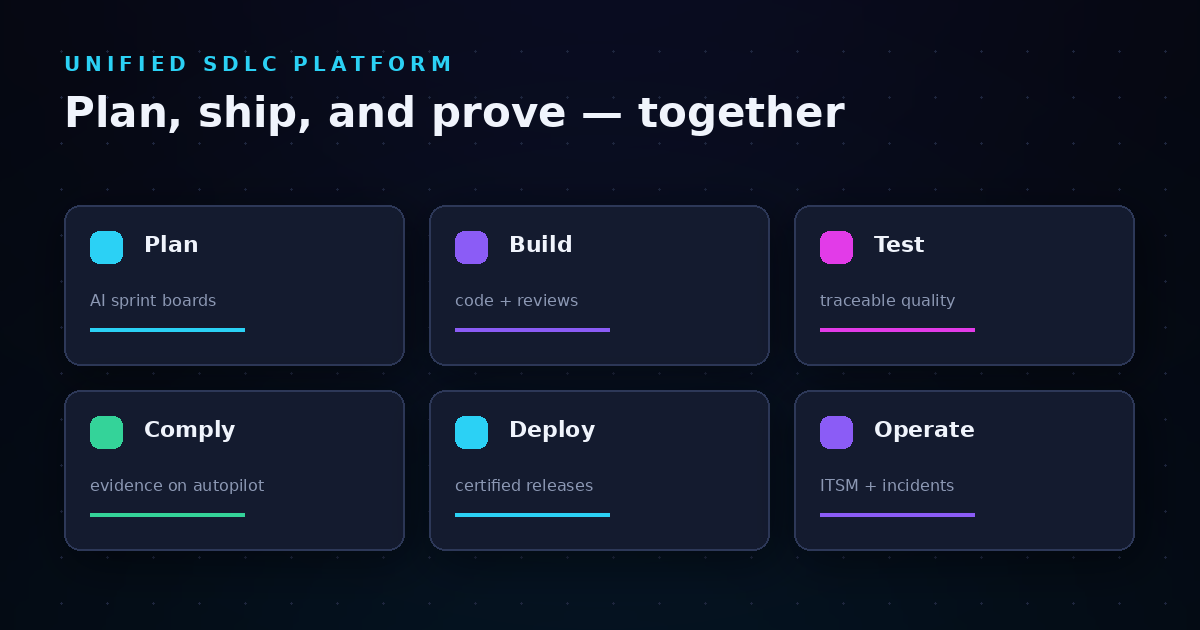
LoopIQ delivers exactly what mid-sized engineering teams need: a unified workspace where compliance evidence captures itself from the work you already do. Instead of running five or more separate tools and stitching together audit packets at the end of each release cycle, you get a single intelligent system that connects planning, testing, DevOps, and documentation.
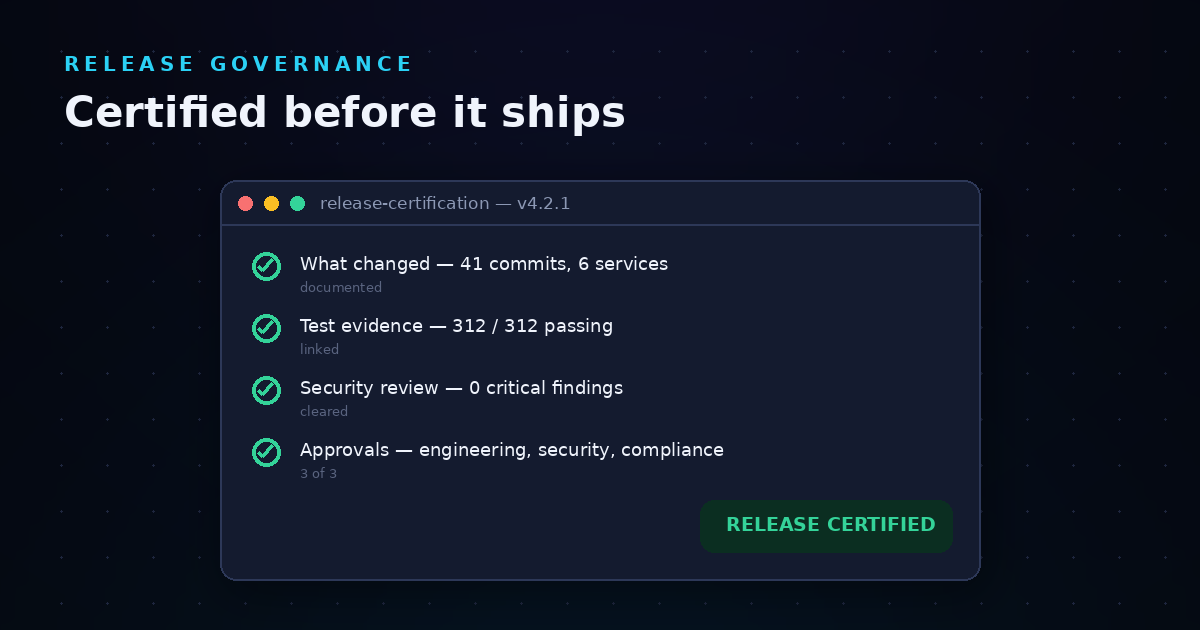
The platform embeds compliance tracking into your daily delivery workflow. As your team writes code, reviews changes, and approves releases, LoopIQ automatically binds those approvals and quality signals to each release. This creates a defensible certification trail that auditors can review immediately.
LoopIQ generates a one-click compliance evidence dossier for every release, eliminating the two-day scramble that typically accompanies audit preparation. Your engineering team stays focused on building features instead of assembling evidence packets.
Pros:
Cons:
GitLab combines source code management, CI/CD pipelines, and security scanning into a single application. Development teams can manage their entire workflow from code commit through deployment without switching between different vendor tools.
The platform includes built-in security scanning that runs during your pipeline. You can configure compliance frameworks and audit events, though evidence collection for external audits typically requires additional tooling or manual effort.
Pros:
Cons:
Harness emphasizes deployment automation and uses machine learning to verify deployments and roll back failures automatically. The platform includes modules for CI, CD, feature flags, and cloud cost management that organizations can adopt independently.
For compliance, Harness offers pipeline governance features that let you set policies on what can be deployed and when. Audit trails track pipeline executions, though connecting those records to release-level compliance evidence typically requires integration with other systems.
Pros:
Cons:
Digital.ai focuses on release orchestration and value stream management for large enterprise environments. The platform coordinates releases across multiple teams, tools, and environments, with visibility dashboards that track delivery metrics.
The platform includes compliance features focused on release governance and audit trails. Organizations can define approval gates and capture release records, though the emphasis leans toward orchestration rather than evidence generation.
Pros:
Cons:
Atlassian's combination of Jira for project management and Bitbucket for source control covers a significant portion of the software delivery lifecycle. Teams can link code changes to Jira issues and track work from requirements through deployment.
For compliance, Atlassian offers audit logs and permission controls. However, generating compliance evidence for external audits typically requires manual effort to connect work items, code changes, and deployment records into coherent documentation packages.
Pros:
Cons:
CloudBees builds on Jenkins to add enterprise management, security, and analytics capabilities. Organizations already invested in Jenkins can gain centralized control, role-based access, and pipeline analytics without replacing their existing CI/CD foundation.
The platform includes compliance-focused features like pipeline policies and audit trails. Teams can enforce standards across Jenkins instances and track who changed what, though connecting these records to release-level compliance evidence requires additional work.
Pros:
Cons:
Copado focuses exclusively on Salesforce development environments, offering DevOps capabilities tailored to Salesforce's unique architecture. The platform supports both low-code administrators and developers working with Apex and Lightning components.
For Salesforce-heavy organizations, Copado includes compliance features specific to that ecosystem. Release governance, testing automation, and deployment tracking work with Salesforce's metadata-driven development model.
Pros:
Cons:
| Platform | Automated Evidence | Unified SDLC | Release Certification |
|---|---|---|---|
| LoopIQ | ✓ | ✓ | ✓ |
| GitLab | ✗ | ✓ | ✗ |
| Harness | ✗ | ✗ | ✗ |
| Digital.ai | ✗ | ✗ | ✗ |
| Atlassian | ✗ | ✗ | ✗ |
| CloudBees | ✗ | ✗ | ✗ |
| Copado | ✗ | ✗ | ✗ |
Your software delivery platform should capture compliance evidence automatically—not as a separate workflow, but as a natural byproduct of how your team already works. When a developer opens a pull request, that action should create traceable evidence. When a release manager approves a deployment, that approval should bind to the release record permanently.
Look for platforms that connect compliance posture to release decisions in real-time. You want to know before you ship whether a release meets your compliance requirements, not discover gaps during an audit three months later.
The most effective platforms also preserve the state of the world at decision time. Auditors don't just want to know what happened—they want to understand the context in which decisions were made. A platform that captures this context automatically builds defensibility and leadership trust.
AI in software delivery compliance moves beyond basic automation into predictive intelligence. Instead of checking boxes after the fact, AI-powered platforms can flag potential compliance gaps before a release ships. This shifts your team from reactive firefighting to proactive risk management.
AI also helps with the documentation burden. Generating release notes, summarizing change impacts, and drafting compliance narratives are tasks where AI assistance saves significant time. The key is ensuring AI-generated content flows into your audit trail with appropriate human oversight.
For teams using AI agents in their development workflow, governance becomes critical. A platform should track what AI agents do, require approvals for significant changes, and integrate agent actions into your compliance evidence chain.
LoopIQ solves the core problem that other platforms leave unaddressed: compliance evidence that generates itself. While other tools require you to build evidence packages manually or stitch together records from multiple systems, LoopIQ captures approvals, quality signals, and certification trails as part of your normal delivery workflow.
This architectural difference has practical consequences. According to CircleCI's 2026 State of Software Delivery report, teams are producing more code than ever due to AI-assisted development, but many organizations are not seeing that code reach customers faster. The bottleneck is often validation and governance. LoopIQ removes that bottleneck by embedding governance into delivery rather than adding it as a checkpoint.
When your next audit arrives, you won't need to pull senior engineers off shipping to assemble evidence packets. LoopIQ makes compliance evidence available immediately, with every release certified and every decision documented at the moment it happens.
Ready to ship software faster while staying audit-ready? Visit LoopIQ to see how automated compliance evidence can change how your team works.
An AI software delivery platform combines development tools with artificial intelligence to automate and optimize how you build, test, and release software. LoopIQ uses AI to generate compliance evidence automatically, flag potential gaps before releases ship, and create audit-ready documentation from your team's existing work.
Automated evidence collection captures compliance artifacts as your team performs normal development activities. When developers commit code, reviewers approve changes, and release managers authorize deployments, LoopIQ records these actions with timestamps and context. This creates an audit trail without requiring separate documentation steps.
AI software delivery platforms reduce manual compliance work significantly but don't eliminate human judgment entirely. LoopIQ automates evidence collection, certification trails, and documentation generation. Your compliance team still defines policies and reviews AI-flagged issues, but they spend time on decisions rather than data gathering.
Support varies by platform. LoopIQ generates evidence that supports multiple frameworks including SOC 2, ISO 27001, and industry-specific requirements. The platform maps documentation to your SDLC topology, so evidence aligns with how auditors expect to review your controls.
Implementation timelines depend on your current tooling and complexity. LoopIQ includes import tooling that simplifies migration from legacy tracking systems. Teams typically see value quickly because evidence collection starts working immediately once integrations connect to your existing development tools.