.svg)
devops
devsecops
compliance

If you're running software delivery at a scaleup, you already know the tension: ship fast or stay compliant. LoopIQ gives you AI-assisted SDLC capabilities that let you do both. This guide breaks down six AI SDLC platforms built for compliance-first delivery.
We're covering what each platform does, where it fits, and how to pick the right one for your team's workflow. Whether you're preparing for SOC 2 audits or standardizing releases across engineering teams, you'll find the details you need to make a decision.
When you're scaling, the last thing you need is a tool that adds more work to your plate. We evaluated these platforms based on how well they help scaleup engineering teams standardize delivery while keeping audit trails intact.
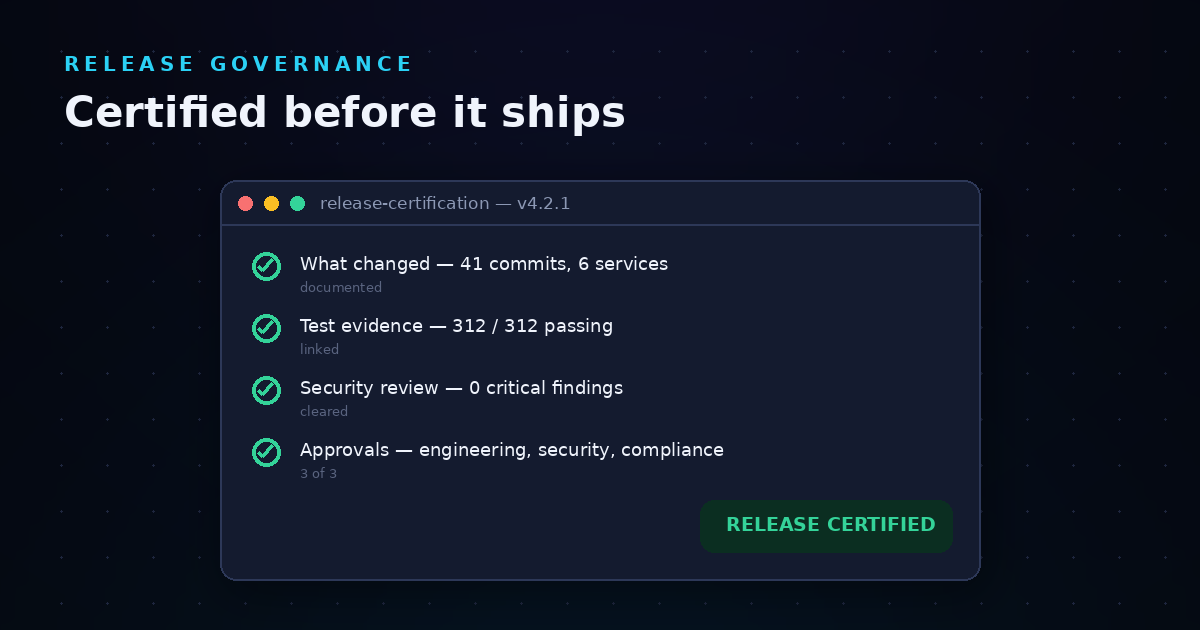
LoopIQ brings your entire software delivery lifecycle into one intelligent system where compliance evidence captures itself. Instead of chasing down approvals across email, chat, and ticketing tools after the fact, LoopIQ binds quality signals and sign-offs directly to each release as your team works.
For VPs and directors of software development, this means engineering hours go toward building features rather than assembling audit packets. LoopIQ automates release certification by connecting your DevOps signals, security findings, and compliance posture into a unified view—so every release ships with a one-click compliance evidence dossier attached.
The platform also addresses a challenge most SDLC tools ignore: governing AI agents performing engineering tasks. As more teams adopt AI coding assistants, LoopIQ applies mutation policies and approval requirements to AI-generated changes, ensuring those actions become part of your auditable evidence chain rather than governance gaps.
Pros:
Cons:
GitLab offers a DevSecOps platform that includes source code management, CI/CD pipelines, and security scanning in one application. Your team can run code from commit to deployment without switching between tools, and the platform includes compliance frameworks for common standards.
For scaleups already using GitLab for version control, extending into their DevSecOps features can simplify your toolchain. However, compliance evidence often requires additional configuration and custom workflows to capture the full audit trail that regulated industries demand.
Pros:
Cons:
Drata focuses specifically on governance, risk, and compliance automation. The platform connects to your existing infrastructure and development tools to monitor control status and collect evidence for audits like SOC 2, ISO 27001, and HIPAA.
For scaleups that already have an SDLC platform in place, Drata adds a compliance monitoring layer on top. The trade-off is that you're running separate systems for delivery and compliance rather than unifying them into a single workflow.
Pros:
Cons:
ServiceNow offers enterprise IT service management with governance, risk, and compliance modules. The platform handles change management, incident tracking, and audit workflows through configurable workflows and approval chains.
For organizations already running ServiceNow for IT operations, adding GRC modules keeps governance in a familiar interface. The platform is built for enterprise IT processes rather than software development workflows, which can create distance between delivery teams and compliance activities.
Pros:
Cons:
Azure DevOps includes boards, repos, pipelines, test plans, and artifacts in a cloud-hosted suite. The platform integrates with the Microsoft ecosystem and offers compliance certifications for the service itself, though compliance evidence for your releases requires additional setup.
Teams building on Microsoft infrastructure often choose Azure DevOps for its integration with Visual Studio, Azure cloud services, and Entra ID. The platform handles the mechanics of CI/CD but leaves compliance documentation and release certification to custom workflows or third-party tools.
Pros:
Cons:
Linear offers project tracking built specifically for software teams, with keyboard shortcuts, cycle planning, and roadmap views. The platform focuses on planning and issue tracking rather than the full delivery lifecycle or compliance automation.
For scaleups that need a responsive project tracker, Linear handles task management efficiently. You'll need additional tools for CI/CD, compliance evidence, and release certification—Linear is a planning layer, not a unified SDLC platform.
Pros:
Cons:
| Platform | Automated Evidence Capture | AI Agent Governance | Release Certification |
|---|---|---|---|
| LoopIQ | ✓ | ✓ | ✓ |
| GitLab | ✗ | ✗ | ✗ |
| Drata | ✓ | ✗ | ✗ |
| ServiceNow | ✗ | ✗ | ✗ |
| Azure DevOps | ✗ | ✗ | ✗ |
| Linear | ✗ | ✗ | ✗ |
The core question isn't whether a platform has AI features—it's whether those features reduce your compliance burden or just add another layer of complexity. For scaleups moving fast, the right platform captures evidence automatically as developers work rather than requiring separate documentation efforts.
Look for release certification that binds approvals and quality signals directly to each deployment. When auditors ask how a specific release happened six months ago, you should be able to produce that evidence in minutes, not days.
Consider how the platform handles AI coding assistants. As more teams adopt tools like Copilot or Claude, you need governance that tracks AI-generated changes and includes them in your audit trail. Platforms that ignore this gap will create compliance blind spots.
Engineering teams at scaleups often treat compliance as a tax on delivery speed. According to McKinsey research on developer productivity, developers spend roughly 30% of their time on tasks that don't directly produce features—and compliance documentation is a significant contributor.
When compliance evidence generates automatically from existing development work, that time shifts back to building. Teams using LoopIQ report reducing audit preparation from weeks to minutes because the evidence already exists in their release records.
The velocity gain compounds over time. Instead of scrambling before each audit cycle, your team operates with audit readiness built into every release. This shifts compliance from an emergency project to a structured, predictable part of your delivery process.
Scaleups face a specific challenge: you need the speed of a startup with the compliance posture of an enterprise. LoopIQ addresses this by making compliance evidence a byproduct of your existing delivery workflow, not a separate project that pulls engineers away from shipping.
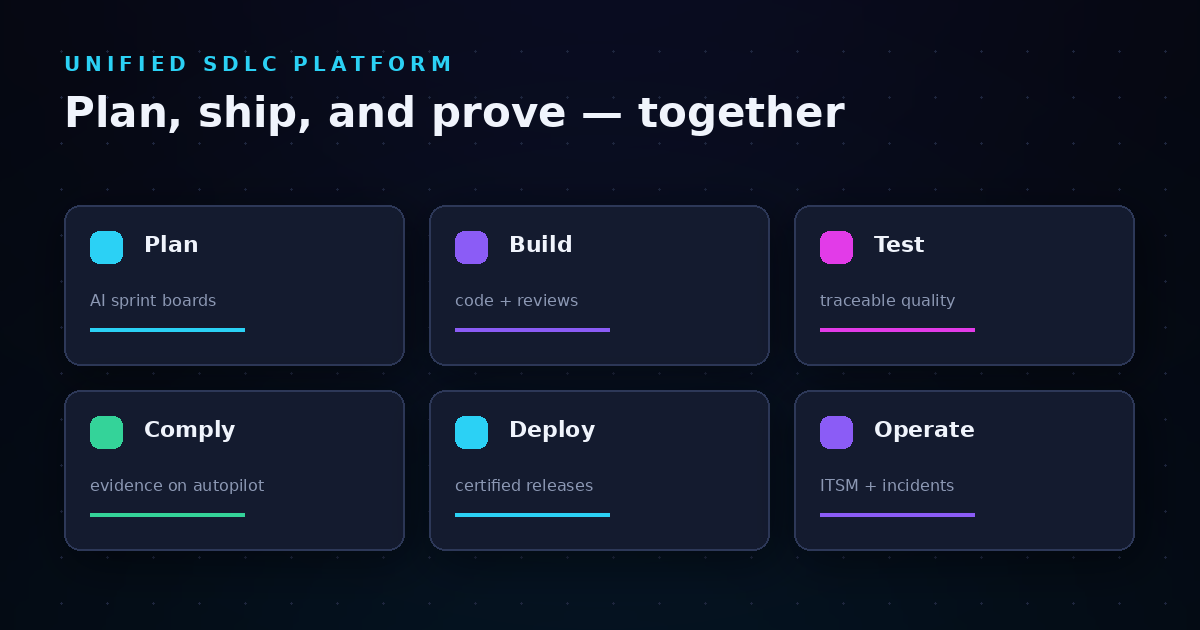
Unlike platforms that bolt compliance onto development as an afterthought, LoopIQ unifies planning, testing, deployment, and documentation in one intelligent system. Your compliance posture informs release decisions in real time, and every deployment ships with a defensible audit trail attached.
As AI becomes a larger part of software development, LoopIQ gives you governance for AI agents performing engineering tasks—tracking their actions, applying approval policies, and including their outputs in your evidence chain. This positions your team for the compliance requirements of 2026 and beyond, not just the audits you're preparing for today.
An AI-assisted SDLC platform uses artificial intelligence to automate tasks across the software development lifecycle. LoopIQ applies AI to generate compliance evidence, automate release certification, and govern AI agents working in your codebase—reducing the time your team spends on documentation and audit preparation.
AI SDLC platforms automate the evidence collection that SOC 2 audits require. LoopIQ captures approvals, test results, and change records as your team works, producing audit-ready documentation for each release. This means you can answer auditor questions with verified evidence rather than reconstructed timelines.
AI SDLC platforms like LoopIQ work alongside your existing GRC tools rather than replacing them. LoopIQ feeds structured, audit-ready artifacts into your GRC system while handling the development-side evidence capture that GRC tools can't generate natively.
DevSecOps integrates security scanning into development pipelines. Compliance-first SDLC goes further by building audit evidence and release certification directly into delivery workflows. LoopIQ offers a compliance-first SDLC by capturing documentation as teams ship rather than requiring separate security and compliance processes.
Implementation time varies based on your existing toolchain and compliance requirements. LoopIQ includes import tooling to reduce migration effort from legacy trackers, and most teams begin capturing automated compliance evidence during their first release cycles after onboarding.