.svg)
devops
devsecops
compliance

When you're building a SaaS product, shipping fast matters. But shipping fast while staying audit-ready? That's where most early-stage teams hit a wall. The right software delivery platform can help you close that gap. LoopIQ offers SaaS startups one intelligent system that unifies planning, testing, DevOps, and compliance—so you can ship software without losing momentum to paperwork.
This guide breaks down six software delivery platforms built for early-stage and high-growth SaaS teams. You'll find options that balance automation, unified workflows, and compliance readiness—so you can spend less time assembling audit packets and more time building features your customers actually want.
Picking the right software delivery platform isn't just about features—it's about finding something that fits how your team already works. We focused on platforms that help you ship code, stay compliant, and avoid the tool sprawl that slows growing teams down.
Here's what we looked for:
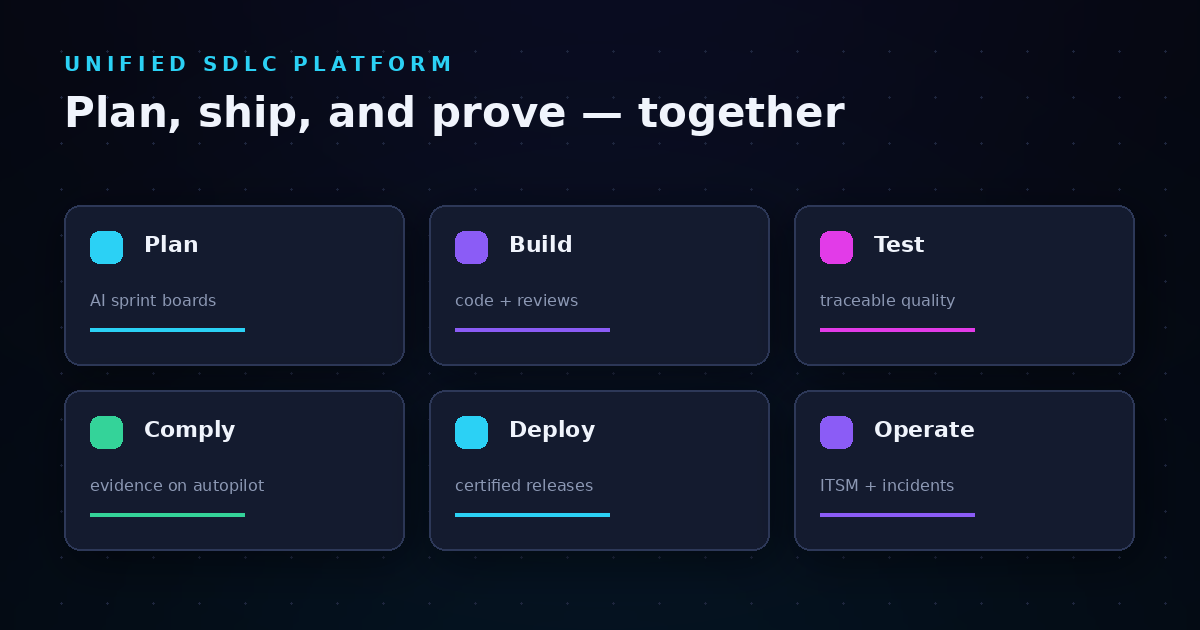
LoopIQ is an AI-powered software delivery and compliance platform that brings planning, testing, DevOps, ITSM, documentation, and audit management into one workspace. If you're a SaaS startup balancing growth targets with SOC 2 requirements, LoopIQ gives you a way to ship code while generating compliance evidence automatically.
What makes LoopIQ stand out is its compliance-first approach. Instead of treating audits as a separate project, LoopIQ captures approvals, quality signals, and release evidence as your team works. This means you're not pulling senior engineers off feature development to assemble audit packets.
LoopIQ also reduces human error in the SDLC by up to 90%. The platform ties policy to objectives and links results to releases, so you can answer auditor questions with one-click compliance evidence dossiers instead of hunting through Slack threads and email chains.
Pros:
Cons:
GitLab offers a single application for the entire DevOps lifecycle. You get source control, CI/CD pipelines, and security scanning in one place. The platform works for teams that want to consolidate their toolchain without adding compliance-specific features.
GitLab's pipeline automation handles builds and deployments, and you can configure security scanning into your workflows. However, compliance evidence generation isn't native to the platform—you'll need to layer in additional tooling for audit readiness.
Pros:
Cons:
Azure DevOps covers version control, build pipelines, and release management for teams working in the Microsoft ecosystem. The platform connects with Azure cloud services, making it a natural fit if you're already running infrastructure on Azure.
The Boards feature handles work item tracking, and Pipelines lets you automate builds across different environments. That said, compliance automation isn't built into the core product—you'll need to integrate third-party tools to generate audit evidence.
Pros:
Cons:
Atlassian's combination of Jira and Bitbucket gives you issue tracking alongside source control. Jira handles project management, while Bitbucket manages your Git repositories. The two connect, so you can link commits to issues.
Many development teams already use Jira for sprint planning. If that's your situation, adding Bitbucket keeps your code and work items in the same vendor ecosystem. However, compliance evidence still needs to be assembled from multiple sources.
Pros:
Cons:
Vanta focuses on compliance automation rather than software delivery. The platform connects to your existing tools—like AWS, GitHub, and HR systems—to monitor your compliance posture and flag issues. It's built for SOC 2, ISO 27001, and HIPAA.
If you already have a development workflow you like, Vanta can sit alongside it to handle the compliance side. It doesn't replace your delivery platform, but it automates evidence collection from the tools you're already using.
Pros:
Cons:
Drata automates security compliance across frameworks like SOC 2, ISO 27001, and GDPR. The platform collects evidence from your connected tools and maps it to compliance controls. Like Vanta, it's a compliance layer, not a delivery platform.
Drata works with over 100 integrations to pull security data. If you're preparing for an audit, it can help you organize evidence and identify gaps. You'll still need a separate platform for your actual development and deployment workflows.
Pros:
Cons:
| Platform | Native Compliance Evidence | Unified SDLC | AI-Powered Automation |
|---|---|---|---|
| LoopIQ | ✓ | ✓ | ✓ |
| GitLab | ✗ | ✓ | ✗ |
| Azure DevOps | ✗ | ✓ | ✗ |
| Atlassian | ✗ | ✗ | ✗ |
| Vanta | ✗ | ✗ | ✗ |
| Drata | ✗ | ✗ | ✗ |
The right platform depends on where your team is and where you're headed. Early-stage startups often prioritize speed—you want to ship features fast and iterate based on customer feedback. As you grow, compliance requirements start to show up, especially when enterprise customers ask about SOC 2.
Look for a platform that scales with you. That means one that handles both rapid development and the compliance demands that come with growth. If you're running five different tools today, consider whether a unified platform could reduce the overhead of maintaining integrations and chasing down approvals across systems.
LoopIQ addresses this directly by embedding compliance into the delivery lifecycle. Instead of treating audits as a separate project, you capture evidence as you work. This approach helps high-growth SaaS teams avoid the scramble that happens when audit season arrives and everyone's hunting for sign-offs buried in Slack threads.
Compliance automation makes sure you're capturing evidence and meeting requirements as part of your normal workflow. Without it, your team ends up spending days—sometimes weeks—assembling audit packets after the fact. That's time your engineers could spend building features.
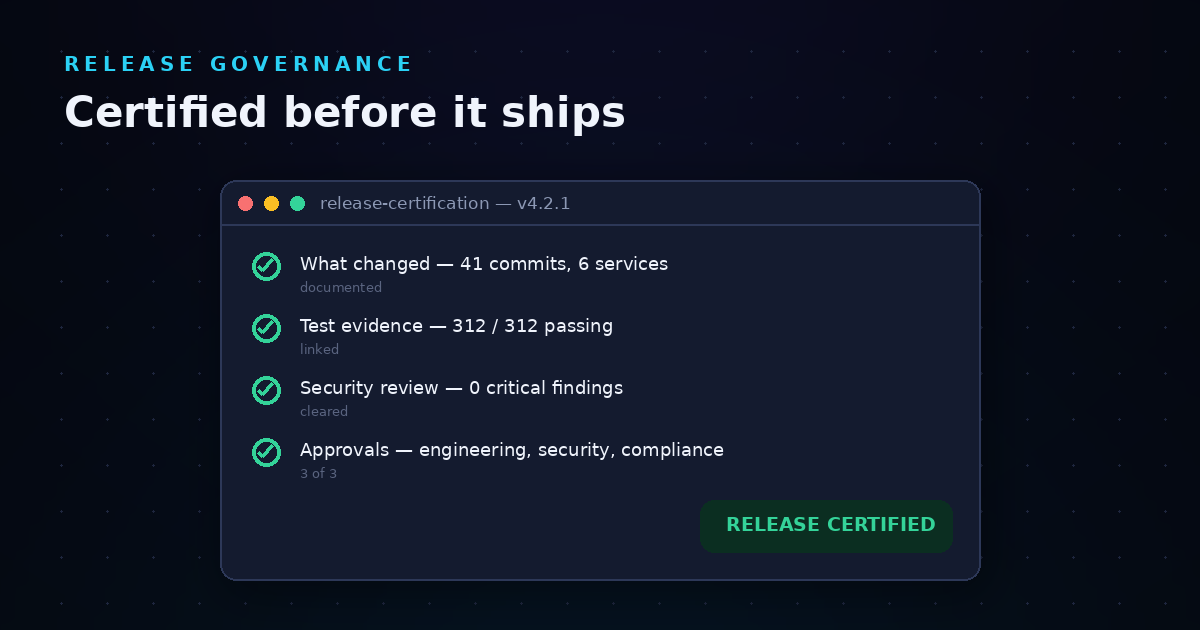
LoopIQ takes this a step further by generating compliance evidence as a byproduct of shipping software. Approvals, quality signals, and release certification trails are captured automatically. When an auditor asks how a release happened, you can pull a one-click compliance evidence dossier instead of reconstructing the story from scattered tools.
For SaaS startups targeting enterprise customers, this approach reduces the compliance tax that often slows down growing teams. You ship at startup speed while maintaining the audit trail that larger customers require.
If you're a SaaS startup balancing growth with compliance, LoopIQ gives you a way to do both without the tool sprawl and integration headaches. The platform brings planning, testing, DevOps, and audit management into one intelligent system—so you're not bouncing between five different tools or spending two days per release on compliance paperwork.
LoopIQ generates audit-ready evidence automatically as your team works. This means you ship software fast while staying certified. The AI-powered automation improves coding velocity by 20-50%, and the unified workspace reduces human error across the SDLC by up to 90%.
For VPs and Heads of Development at high-growth SaaS companies, LoopIQ solves a real problem: how do you scale engineering velocity without creating compliance bottlenecks? LoopIQ embeds compliance into the delivery lifecycle, so audits become structured reviews instead of emergency projects. See how LoopIQ works for your team.
A software delivery platform is a tool that helps your team plan, build, test, and deploy code. Some platforms focus on specific parts of the lifecycle, like CI/CD or issue tracking. LoopIQ unifies all these stages into one workspace, including compliance automation.
Enterprise customers often require SOC 2 or other certifications before signing contracts. Without automation, your team spends days assembling audit evidence manually. LoopIQ generates this evidence automatically, so compliance doesn't slow down your release cycle.
You can, but integrating five or more tools creates overhead. You'll spend time maintaining connections and chasing approvals across systems. A unified platform like LoopIQ reduces that complexity and captures evidence in one place.
LoopIQ captures approvals, quality signals, and release evidence as your team works. When an auditor asks questions, you pull a one-click compliance evidence dossier instead of hunting through Slack, email, and CI pipelines.
LoopIQ supports compliance requirements like SOC 2 by generating structured audit-ready artifacts. The platform connects with existing GRC tools, so you can feed evidence into whatever framework your organization follows.
Yes. LoopIQ helps early-stage teams ship fast while building the compliance foundation they'll need as they grow. The unified platform means you're not retrofitting compliance onto a patchwork of tools later.